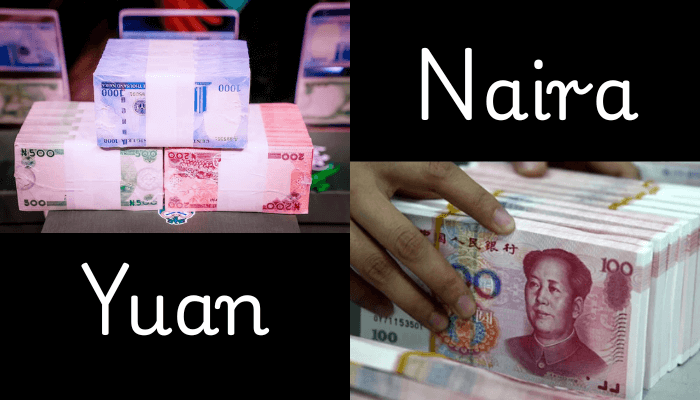
The Federal Government (FG) is pushing to expand Nigeria’s existing Naira–Yuan currency swap arrangement with China to $10 billion, a strategic move aimed at easing pressure on the U.S. dollar, stabilising the naira, and correcting a widening trade imbalance between both countries.
The proposed expansion would significantly scale up the current $2.5 billion swap agreement and allow Nigerian businesses to transact directly in Chinese yuan, reducing dependence on the dollar for bilateral trade.
Nigeria Seeks Direct Naira–Yuan Trade Settlement
Joseph Tegbe, Director-General and Global Liaison for the Nigeria–China Strategic Partnership, disclosed that discussions are ongoing to renew and expand the existing swap line.
According to him, the current framework forces Nigerian traders to convert naira to dollars before converting dollars to yuan — a process that increases demand for the U.S. dollar and intensifies exchange rate pressure.
Under the proposed $10bn Naira–Yuan swap deal:
-
Nigerian importers would pay in naira locally
-
Corresponding yuan would be credited directly in China
-
Dollar intermediation would be eliminated
-
Pressure on the dollar–naira exchange rate would ease
Background: 2018 Currency Swap Agreement
The Naira–Yuan swap was first introduced in 2018 under former Central Bank Governor Godwin Emefiele and Yi Gang, Governor of the People’s Bank of China.
The three-year $2.5 billion agreement (equivalent to 16 billion yuan) enabled both countries to exchange principal and interest in local currencies to facilitate trade and reduce dollar dependency.
However, officials say the swap line was underutilised and insufficient to meet growing trade volumes.
Nigeria–China Trade Imbalance Hits $23bn
China remains Nigeria’s largest trading partner, with total trade volume estimated at $23 billion.
Breakdown of trade figures:
-
Nigerian exports to China: ~$2 billion
-
Imports from China: Over $20 billion
Key imports include electronics, machinery, textiles, and industrial equipment critical to Nigeria’s manufacturing and technology sectors.
The FG now targets $15 billion in exports within five years, leveraging China’s new zero-tariff policy for African countries, which takes effect in May 2026.
Fast-Tracking Exports Under China’s Zero-Tariff Policy
To rebalance trade, Nigeria is accelerating export protocols to take advantage of China’s duty-free window.
Products expected to benefit include:
-
Hides and skins
-
Cashew
-
Aquatic products such as crabs and shrimps
-
Agricultural commodities
Officials say formalising previously informal exports will boost foreign exchange earnings and support naira stability.
FX Reserves Key to Swap Success
For the expanded swap to function effectively, Nigeria must maintain strong foreign exchange reserves.
The Central Bank of Nigeria (CBN) is reportedly working to strengthen reserve levels to support the enlarged arrangement.
Analysts note that without adequate FX buffers, the swap may not deliver its full macroeconomic benefits.
Strategic Investments Beyond Currency Swap
Beyond trade settlement reforms, Nigeria is also pursuing equity-based partnerships with Chinese firms.
One notable example is the $1 billion investment by China Harbour Engineering Company in the Lekki Deep Sea Port, alongside collaborations in agriculture, steel production, and poultry development.
What the $10bn Naira–Yuan Swap Means for Nigeria
If successfully implemented, the expanded swap deal could:
-
Reduce dollar demand in Nigeria’s FX market
-
Improve naira exchange rate stability
-
Lower transaction costs for importers
-
Strengthen bilateral trade efficiency
-
Support export diversification strategy
Economists say the move signals Nigeria’s broader strategy to diversify foreign exchange channels and reduce vulnerability to global dollar liquidity shocks.
Outlook
With trade volumes rising and China deepening economic engagement across Africa, the $10bn Naira–Yuan swap proposal represents one of Nigeria’s most significant monetary policy adjustments in recent years.
If finalised, the deal could reshape Nigeria–China trade dynamics while offering temporary relief to the country’s strained foreign exchange market.