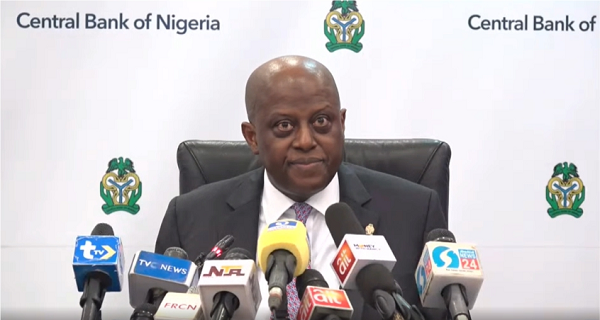
The Governor of the Central Bank of Nigeria (CBN), Olayemi Cardoso, has revealed that Nigeria’s net foreign reserves surged by 772 percent within two years, rising from $3.99 billion at the end of 2023 to $34.80 billion by the end of 2025.
Cardoso attributed the sharp increase to sustained foreign exchange reforms, improved transparency, and stronger reserve management practices.
Net Reserves Now Stronger Than 2023 Gross Position
According to the CBN governor, the net reserves recorded at the end of 2025 exceeded Nigeria’s total gross reserves at the close of 2023.
-
Net reserves (2023): $3.99 billion
-
Net reserves (2025): $34.80 billion
-
Gross reserves (2023): $33.22 billion
He further disclosed that Nigeria’s gross external reserves climbed to $50.45 billion as of February 16, 2026, following improvements in external sector fundamentals.
Year-by-Year Growth Breakdown
Cardoso explained that reserve accumulation accelerated between 2024 and 2025:
-
Net reserves (2024): $23.11 billion
-
Net reserves (2025): $34.80 billion
-
Gross reserves (2024): $40.19 billion
-
Gross reserves (2025): $45.71 billion
This reflects a $5.52 billion increase in gross reserves within one year, underscoring stronger foreign exchange inflows.
How FX Reforms Boosted Investor Confidence
The CBN governor said reforms aimed at enhancing transparency and credibility in foreign exchange management played a key role in the surge.
According to him, improved FX market governance encouraged investor confidence, leading to stronger foreign capital inflows and better reserve accumulation.
He noted that increased transparency reassures investors and strengthens Nigeria’s external financial position.
What Stronger Reserves Mean for Nigeria
Foreign reserves serve as a financial buffer that enables a country to:
-
Pay for imports
-
Meet international financial obligations
-
Defend its currency during economic shocks
-
Stabilise the foreign exchange market
Cardoso said the improved reserve position gives Nigeria greater capacity to manage exchange rate pressures and external risks.
Outlook for the Nigerian Economy
The CBN governor described the reserve growth as evidence that ongoing policy reforms are yielding results.
He assured that the apex bank will continue to:
-
Maintain strong reserve levels
-
Carefully manage the foreign exchange market
-
Support macroeconomic stability
-
Promote sustainable economic growth
With reserves strengthening and FX reforms ongoing, analysts say Nigeria’s improved external buffer could enhance currency stability and investor sentiment in 2026.