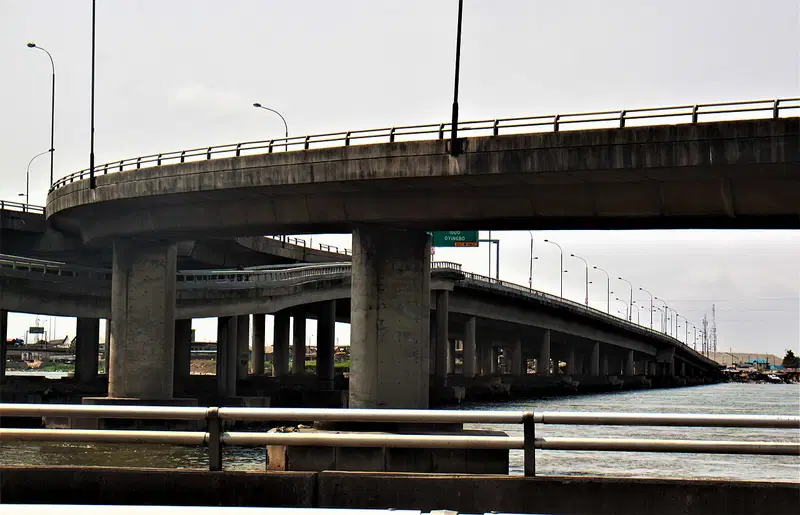
Nigeria’s Federal Executive Council has approved the demolition and complete reconstruction of Carter Bridge in Lagos, marking a significant step in the federal government’s plan to upgrade key transport infrastructure across the country.
The decision was announced on Wednesday by the Minister of Works, David Umahi, while briefing journalists after the council meeting held at the State House in Abuja.
According to the minister, the council concluded that the ageing bridge structure can no longer be effectively rehabilitated and must be replaced with a new one designed to meet modern engineering standards.
Engineering assessment leads to decision
Umahi explained that the decision followed technical assessments and consultations with stakeholders on the structural condition of the bridge.
He said earlier proposals to rehabilitate the bridge were eventually dropped after experts determined that rebuilding it from scratch would be more viable and safer in the long term.
“Following the review of engineering reports and stakeholder consultations, the recommendation was clear that Carter Bridge can no longer be rehabilitated. The appropriate solution is demolition and construction of a new bridge,” the minister said.
The Federal Executive Council also approved N5.6 billion for advanced engineering consultancy services that will handle the design work and detailed cost estimates for the new structure.
The project is expected to include modern design features aimed at improving durability, traffic flow and safety standards.
Strategic transport corridor in Lagos
Carter Bridge is one of the major transport links connecting Lagos Island to the mainland.
The bridge plays a crucial role in the daily movement of thousands of commuters and vehicles within Nigeria’s commercial capital.
Urban planners say the structure has long faced pressure due to heavy traffic volumes and increasing urban expansion in Lagos.
With the approval granted, the federal government is expected to begin the design and planning phase ahead of full reconstruction.
Government pushes major infrastructure upgrades
Umahi noted that the Carter Bridge project forms part of a broader national infrastructure plan aimed at strengthening transport networks and supporting economic development.
He revealed that the council approved six major projects during the meeting, including road and highway reconstruction works across different geopolitical zones.
The minister said the government intends to present several completed infrastructure projects for commissioning by President Bola Ahmed Tinubu in the coming months.
“We are targeting the commissioning of at least four completed projects in each geopolitical zone by May 15. These are not temporary repairs but major infrastructure projects,” Umahi said.
He added that the projects are designed to enhance connectivity, reduce travel time and support trade activities across the country.
Focus on durable infrastructure
The government has increasingly focused on large-scale infrastructure upgrades as part of efforts to modernise Nigeria’s transport systems.
Experts say rebuilding major bridges like Carter Bridge is critical to sustaining mobility in Lagos, a city widely regarded as one of Africa’s busiest economic centres.
With rising traffic pressure and ageing structures, authorities have been reviewing several strategic bridges and highways to determine whether they require rehabilitation or complete reconstruction.
Transportation analysts believe the new Carter Bridge, once completed, could significantly improve traffic movement between Lagos Island and the mainland while ensuring higher structural resilience.
As planning for the reconstruction progresses, authorities are expected to release more details on timelines, traffic management strategies and potential construction phases for the project.