


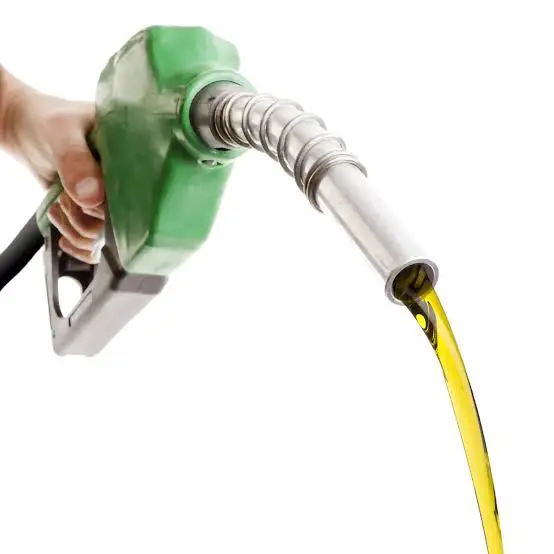
Petroleum marketers have warned that the price of Premium Motor Spirit (PMS), popularly known as petrol, could rise to nearly ₦2,000 per litre if the ongoing conflict in the Middle East continues.
The warning was issued by the Petroleum Products Retail Outlets Owners Association of Nigeria (PETROAN), which said the crisis could also push the price of diesel close to ₦3,000 per litre.
Billy Gillis-Harry, the national president of PETROAN, raised the concern while delivering a keynote address titled “Deconstructing Energy Trilemma” at an event organised by Ignatius Ajuru University of Education in Port Harcourt.
Rising fuel prices linked to global crisis
Gillis-Harry said the conflict in the Middle East is already affecting petroleum product prices globally, with Nigeria also experiencing sharp increases in fuel costs.
According to him, petrol previously sold at around ₦774 per litre before the crisis but has now risen to above ₦1,000 per litre, representing an increase of about 30 percent.
He also noted that Automotive Gas Oil (AGO), commonly known as diesel, which earlier sold for about ₦950 per litre, has climbed to over ₦1,400 per litre—an increase of nearly 49 percent.
He warned that continued price increases could worsen inflation and deepen economic hardship for Nigerians.
Impact on economy and households
The PETROAN president cautioned that higher fuel prices would significantly affect transportation costs and the prices of goods and services across the country.
He said sustained increases could also lead to job losses and further strain businesses already facing economic pressure.
According to him, the situation could escalate if the geopolitical tensions continue to disrupt global oil supply routes and energy infrastructure.
Call to revive local refineries
Gillis-Harry urged the Nigerian National Petroleum Company Limited (NNPC Ltd.) to urgently strengthen Nigeria’s domestic refining capacity to reduce the country’s exposure to global market shocks.
He specifically called on the Group Chief Executive Officer of NNPC Ltd., Bayo Ojulari, to ensure the immediate resumption of production at Nigeria’s government-owned refineries.
According to him, priority should be given to the Port Harcourt Refinery, particularly the Area 5 Plant, and the Warri Refinery.
Both facilities had previously resumed operations briefly before shutting down again for profitability assessments.
Global oil supply under threat
Gillis-Harry explained that the ongoing conflict involving Israel, the United States and Iran is increasing pressure on global oil markets.
He noted that continued drone and missile attacks are threatening critical oil routes and infrastructure, creating uncertainty in global energy supply chains.
“With no clear end to the conflict, petroleum product prices in both international and domestic markets are expected to rise sharply in the coming days,” he warned.
Local refining key to energy security
According to him, rehabilitating Nigeria’s refineries remains essential for ensuring energy security and reducing dependence on imported petroleum products.
He stressed that Nigeria has significant crude oil resources under the custody of NNPC Ltd., which could be used to support domestic refining.
He also noted that government-owned refineries are generally less vulnerable to global supply disruptions compared to privately owned refineries that may depend on imported crude.
Despite the current challenges, Gillis-Harry expressed optimism that ongoing economic reforms under President Bola Ahmed Tinubu would eventually improve the country’s economic outlook.