


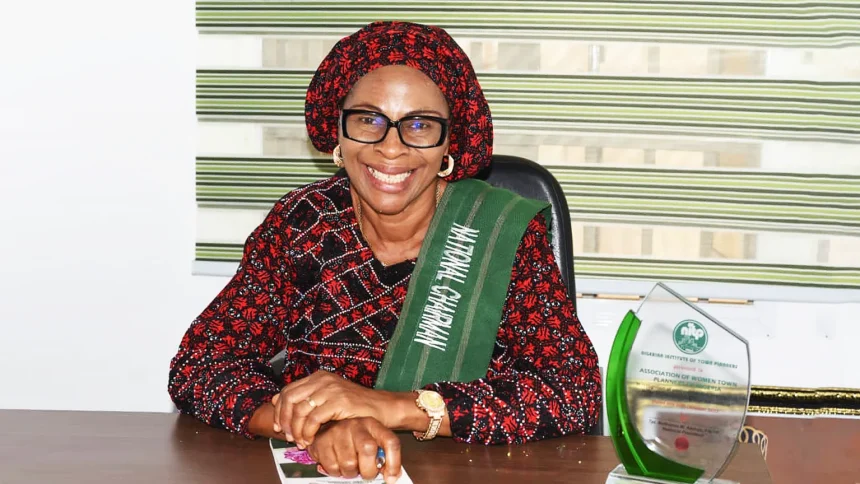
The (AWTPN) has called for increased investment in women and girls as a critical strategy for building inclusive, resilient and sustainable cities across .
Speaking in commemoration of 2026, the National Chairman of AWTPN, , said empowering women in urban planning would significantly improve community development and governance.
Empowering Women for Sustainable Urban Development
Okoye explained that the 2026 theme, “Give to Gain,” highlights the importance of investing in women and girls to achieve equitable and prosperous cities.
According to her, including women in decision-making processes within the urban planning sector will strengthen development outcomes and ensure that cities are designed to meet the needs of all residents.
She said empowering women planners will help build cities that are more sustainable, resilient and socially inclusive.
Challenges Facing Women Town Planners
Despite growing participation in the built environment sector, Okoye noted that women town planners still face structural and cultural barriers limiting their career advancement.
She identified several challenges affecting female professionals, including:
- Limited access to leadership positions
- Inadequate representation in decision-making bodies
- Societal stereotypes
- Limited opportunities for professional development
According to her, these obstacles slow down progress not only for women but also for the entire urban planning profession.
Call for Policy Reforms
To address these challenges, the AWTPN chairman urged policymakers to introduce targeted reforms that support women’s advancement in the sector.
She recommended measures such as leadership quotas where necessary, mentorship programmes, professional training and the creation of inclusive workplace environments in both public and private institutions.
Promoting Gender-Responsive Urban Planning
Okoye emphasised that gender-responsive planning plays a key role in solving urban challenges.
She explained that when women participate actively in planning processes, cities become safer and more accessible, with better infrastructure supporting economic and social opportunities.
According to her, integrating women’s experiences into planning improves areas such as public safety, mobility, housing design and access to essential services.
AWTPN Initiatives to Support Women
The association is also implementing several initiatives to support women in urban planning.
These include mentorship programmes, professional workshops and training sessions designed to equip women with skills in sustainable urban development, climate resilience and leadership.
AWTPN is also engaging students through outreach programmes in secondary schools and tertiary institutions to encourage young girls to pursue careers in urban and regional planning.
Okoye stressed that empowering women within the planning profession would strengthen institutions, improve policies and create cities that better reflect the needs of all citizens.