


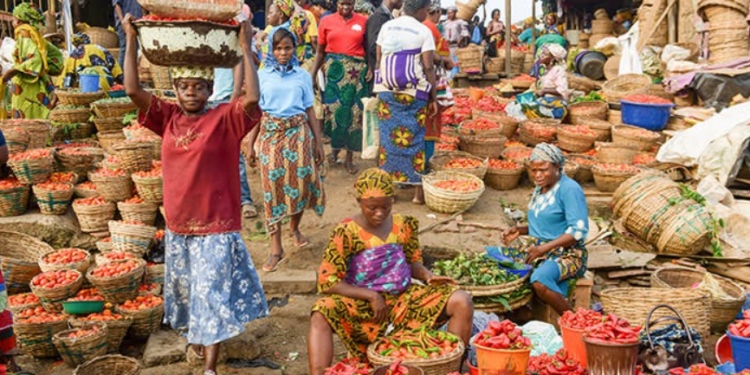
Food prices across markets in Abuja have surged sharply, as rising fuel costs linked to the ongoing Middle East crisis continue to impact Nigeria’s economy.
A market survey by the News Agency of Nigeria shows that increased petrol prices have significantly raised transportation and production costs, forcing traders to adjust prices upward.
The development is placing additional pressure on households already grappling with declining purchasing power and rising living costs.
Price Breakdown Across Markets
At Orange Market along the Abuja–Keffi road, a major bulk food hub:
Tomatoes surged from N9,000–N10,000 to as high as N35,000 per basket
Onions rose to between N40,000 and N45,000 from N15,000–N25,000
In other markets:
Lugbe: Sweet potatoes doubled to N2,000–N2,500; five tubers of yam now cost up to N10,000
Nyanya & Karu: Significant increases recorded in yam, tomatoes, pepper, and onions
Wuse & Utako: General rise in staple food prices
Garki: Mixed trends, with slight drops in some items like tomatoes
Beans prices also climbed, with white beans selling for as much as N1,600 per mudu.
Fuel Costs Driving Inflation
Beyond food, rising fuel prices and unreliable electricity supply are increasing the cost of goods and services.
Small business owners say they are relying more on petrol and diesel to power operations, pushing up expenses.
Sachet water prices have jumped from about N300 to N500 per bag
Ice block prices increased from N500 to N800
Traders say transportation costs—especially from food-producing states like Benue—have tripled, further inflating retail prices.
Residents Feel the Pressure
Residents report that the rising cost of living is affecting nearly every aspect of daily life.
From food to services like haircuts, prices have increased significantly, forcing families to cut back on spending.
Some households warn that continued increases could push essential goods beyond the reach of low-income earners.
The Federal Government has maintained its stance on market-based pricing for petroleum products.
The Minister of Finance, Wale Edun, said the government will not introduce price controls but will explore alternative ways to ease economic pressure.
The current price surge is linked to global oil market disruptions, with crude oil prices rising above $100 per barrel amid tensions involving the United States, Israel, and Iran.
What It Means:
Rising fuel costs are feeding directly into food inflation, deepening Nigeria’s cost-of-living crisis and weakening consumer purchasing power.
Without intervention to stabilise energy costs and improve electricity supply, analysts warn that inflationary pressures could persist in the coming months.