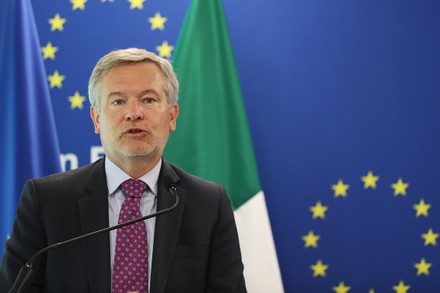
Nigeria’s transition to a sustainable and low-carbon economy will depend heavily on women, the European Union Ambassador to Nigeria and ECOWAS, Gautier Mignot, has said.
Speaking in Abuja at the Women Leading Climate Action, Green Economy Dialogue, Mignot stressed that women already play a central role in Nigeria’s economic structure but remain largely excluded from critical opportunities that could scale their impact.
According to him, unlocking women’s potential is not just a social priority but an economic necessity for Nigeria’s future.
Mignot noted that while Nigeria has significant untapped economic capacity, the most underutilized asset remains women, who dominate key sectors but lack access to finance, leadership roles, and structured investment opportunities.
Women Dominate Key Economic Sectors
Providing insight into women’s contributions, the EU envoy revealed that women account for over 70 percent of Nigeria’s informal economy. He added that they also make up between 50 and 70 percent of smallholder agricultural labour.
Beyond agriculture, women are active players in markets and regional value chains, positioning them as key drivers of grassroots economic activity.
Despite this, Mignot said their influence is not reflected in policy-making, financing access, or leadership roles within the green economy ecosystem.
He explained that although women are already contributing to climate action and sustainability efforts, systemic barriers continue to limit their ability to expand and formalize their businesses.
Call for Inclusive Financing and Policy Support
The ambassador called for the development of inclusive financing systems that can support women-led enterprises across different growth stages.
He argued that financing the green economy should go beyond mobilising capital and focus on accessibility, diversity, and inclusion.
According to him, financial systems must be designed to connect women entrepreneurs with opportunities, while also creating investment pipelines that reflect the realities of small and medium-scale enterprises.
Mignot emphasized that without intentional inclusion, many women-led businesses would remain small, informal, and unable to scale their environmental impact.
Bridging the ‘Missing Middle’ Gap
Also speaking at the event, the convener, Amanda Archibong-Doukouré, highlighted a major structural challenge affecting women-led green businesses—what she described as the “missing middle.”
She explained that many enterprises fall between early-stage grant funding and large-scale investment readiness.
As a result, these businesses struggle to access funding because they are considered too advanced for grants but not sufficiently structured to attract institutional investors.
Archibong noted that this gap continues to limit innovation and growth, particularly for businesses working at the community level where climate impact is most visible.
She added that women-led enterprises dominate areas such as clean energy adoption, agro-processing, circular economy systems, and last-mile distribution, yet remain largely invisible in formal investment ecosystems.
Nigeria’s Green Economy at a Turning Point
Stakeholders at the dialogue agreed that Nigeria is at a critical stage in its transition to a green economy.
With global attention shifting towards climate resilience and sustainable growth, the country has an opportunity to build an inclusive economic model that integrates environmental sustainability with job creation.
However, experts warned that achieving this goal would require deliberate policies that address structural inequalities, especially those affecting women.
Mignot reiterated the European Union’s commitment to supporting Nigeria’s green transition through investments in renewable energy, climate finance, and sustainable value chains.
He stressed that empowering women is essential for building resilient communities and ensuring inclusive economic growth.
A Defining Moment for Inclusive Growth
As Nigeria explores pathways toward a low-carbon future, experts say the role of women cannot be overlooked.
From agriculture to clean energy and trade, women are already laying the foundation for a green economy.
The challenge, however, lies in creating systems that allow them to lead, scale, and fully benefit from their contributions.
With the right policies, access to finance, and institutional support, stakeholders believe women can become the driving force behind Nigeria’s sustainable economic transformation.