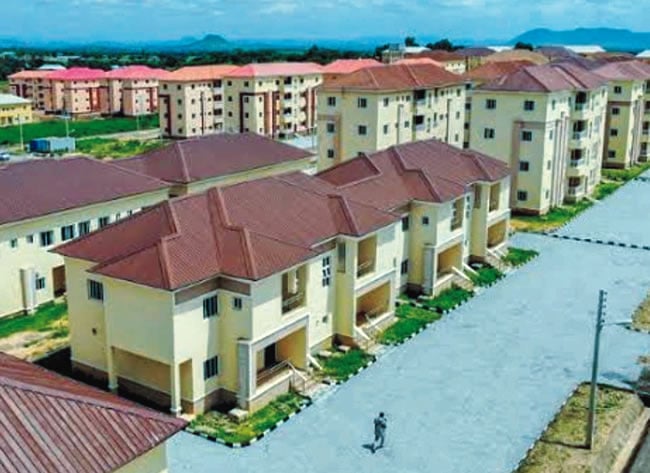
The Mofi Real Estate Investment Fund (MREIF) has disbursed over N97.6 billion to Nigerians for housing acquisition within its first year of operation, the Association of Housing Corporations of Nigeria (AHCN) has disclosed.
The association made this known during a two-day high-level strategy session held in Abuja, where stakeholders reviewed the impact of the fund on housing delivery across the country.
President of AHCN, Eno Obogha, urged state housing corporations to take advantage of the credit facility provided by MREIF to expand access to affordable housing, particularly for low- and middle-income earners.
MREIF, launched by the Federal Government in December 2024 and operational from March 2025, was designed to provide low-cost housing finance at single-digit interest rates.
While commending the fund’s performance, AHCN noted that stringent requirements, including sovereign and bank guarantees, have limited access for many housing corporations.
The association called on financial institutions and development partners to introduce more flexible financing structures that can better support mass housing delivery.
AHCN also stressed the need for stronger collaboration among key institutions, including the Federal Mortgage Bank of Nigeria (FMBN), Family Homes Funds, and MREIF, to deepen long-term housing finance and expand mortgage accessibility.
The recommendations formed part of resolutions adopted at the association’s 113th Council meeting, themed: “Redefining Affordable Housing for Low Income Earners and the Roles of Housing Corporations in Emerging Real Estate Markets.”
The council expressed concern over Nigeria’s worsening housing deficit, particularly among low- and middle-income groups, and called for urgent structural reforms to address the crisis.
Despite ongoing government initiatives, the association noted that many houses built by private developers remain unaffordable, especially in major urban centres such as Abuja and Lagos.
AHCN also decried the marginalisation of state housing corporations in the implementation of the Federal Government’s Renewed Hope Housing Programme, stressing that these institutions remain critical to delivering affordable housing nationwide.
The body further criticised the practice by some state governments of merging housing corporations with ministries or stripping them of their statutory roles, describing such actions as contrary to the National Housing Policy.
To improve housing delivery, the association urged state governments to provide better access to land and funding, while also strengthening institutional frameworks.
In response to rising construction costs driven by inflation and foreign exchange volatility, AHCN advocated the adoption of alternative building technologies such as Hydraform and other locally sourced materials.
The group also emphasised the need to integrate Nigeria’s informal sector into housing programmes, noting that their exclusion has significantly contributed to the country’s housing gap.
AHCN recommended the expansion of housing cooperatives as a viable pathway to improve access to affordable housing for informal workers.
The association raised concerns over declining public confidence in government housing agencies, attributing it to poor performance and limited impact, and called for reforms to improve transparency, efficiency, and accountability.