


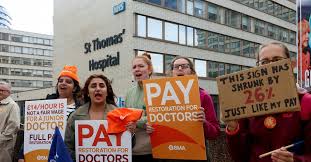
Doctors in England have embarked on their 15th strike in just over three years, escalating a prolonged dispute with the government over pay, working conditions, and job security.
The latest industrial action, led by resident doctors below consultant level, involves a six-day nationwide stoppage, further straining the country’s already pressured public healthcare system.
The strike comes despite doctors securing a 28.9 percent pay increase over three years following previous industrial actions, reflecting ongoing dissatisfaction within the medical workforce.
At the centre of the dispute is the demand for additional pay increases to offset what doctors describe as real-term income losses caused by sustained inflation.
The British Medical Association, representing the doctors, insists on full pay restoration to 2008 levels, arguing that current wages no longer reflect economic realities.
However, the UK government has maintained that meeting such demands is unrealistic, citing prevailing economic challenges and broader fiscal constraints facing the public sector.
Health Secretary Wes Streeting criticised the strike, describing doctors as the biggest beneficiaries of recent public sector pay adjustments.
Streeting condemned the rejection of the government’s latest 4.9 percent pay offer, stating that the decision to strike was premature given previous substantial wage increases.
He warned that the ongoing strike would cost the state-funded National Health Service approximately £300 million, further burdening healthcare delivery across England.
The government has also highlighted recent concessions, including prioritising UK-trained doctors for training positions over foreign applicants, as part of efforts to address workforce concerns.
Despite these measures, negotiations remain deadlocked, with both sides unwilling to compromise, prolonging uncertainty within the healthcare system and raising concerns over patient care disruptions.
The repeated strikes underscore deep-rooted tensions between healthcare workers and policymakers, reflecting broader challenges within the UK’s public health sector amid economic pressures.
