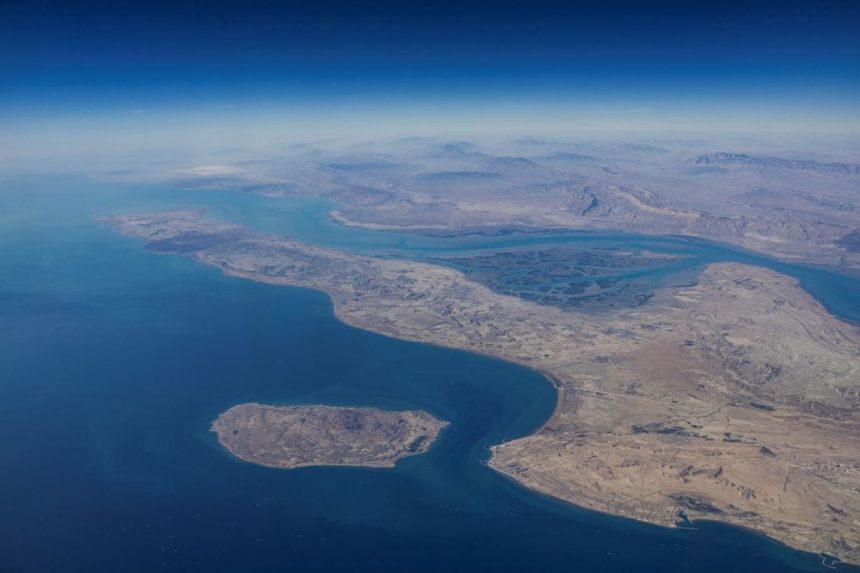
After more than a month of disruption that rattled global energy markets and drove fuel prices upward, Iran has agreed to reopen the strategic Strait of Hormuz under a conditional ceasefire arrangement involving the United States and its allies.
The breakthrough followed diplomatic intervention led by Shehbaz Sharif, whose mediation efforts helped secure a temporary truce between Tehran and Washington, easing tensions in one of the world’s most volatile geopolitical flashpoints.
The Strait of Hormuz, a narrow waterway linking the Persian Gulf to the Gulf of Oman, remains one of the most critical global energy corridors, accounting for roughly a quarter of seaborne oil trade and about 20 percent of liquefied natural gas (LNG) shipments annually. Its closure had triggered widespread concern across international markets.
Announcing the development, Iran’s Foreign Minister, Abbas Araghchi, said Tehran would allow safe passage through the strait for an initial period of two weeks, subject to coordination with Iran’s armed forces and operational considerations.
The decision came after U.S. President Donald Trump accepted a two-week ceasefire proposal, stepping back from earlier threats of military escalation. Trump had previously issued a deadline demanding the reopening of the waterway, warning of severe consequences if Iran failed to comply.
In a statement, Araghchi explained that Iran’s agreement was contingent on a halt to attacks by the United States and Israel, noting that Tehran would “suspend defensive operations” only if hostilities ceased.
Iran’s Supreme National Security Council, however, cautioned that the ceasefire does not signal the end of the conflict, stressing that a lasting resolution would depend on the acceptance of conditions outlined in a 10-point proposal submitted to the United States.
“The agreement does not mark the end of the war,” the council stated, adding that final terms must be negotiated before a permanent settlement can be reached.
Confirming the development, Trump said the ceasefire was the result of high-level engagements involving Pakistani military leadership, including Field Marshal Asim Munir, and emphasised that the move would create room for concluding a long-term peace agreement.
According to him, both sides had already made significant progress on key areas of contention, with the temporary truce designed to allow for the finalisation of negotiations.
Pakistan’s prime minister subsequently declared the ceasefire effective immediately, noting that it would apply across multiple theatres of conflict, including Lebanon, where tensions had also escalated.
Formal negotiations are expected to commence in Islamabad, signalling a new phase of diplomatic engagement aimed at stabilising the region and preventing further disruption to global energy supply chains.
As of the time of filing this report, Israel had yet to issue an official response to the ceasefire arrangement, leaving some uncertainty over the durability of the agreement.