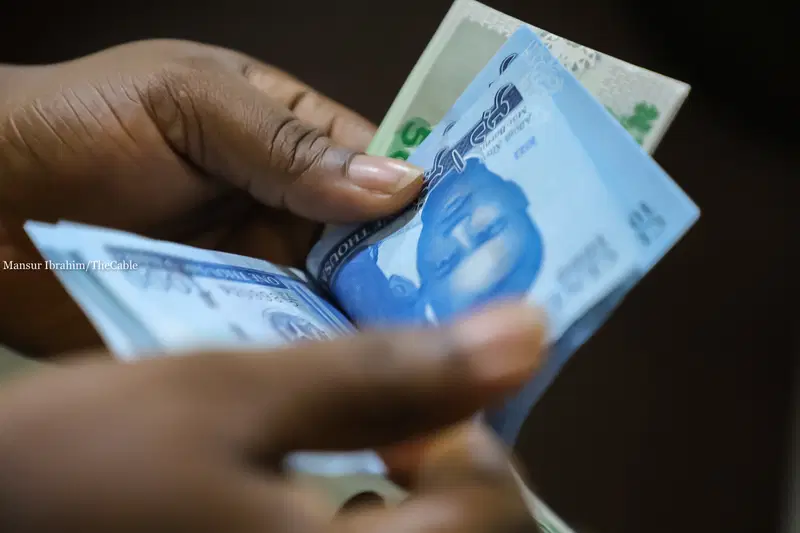
The Nigerian currency appreciated to N1,365 per dollar on Thursday, gaining slightly against the U.S. dollar amid a broader decline in the global value of the greenback.
Data from the Central Bank of Nigeria (CBN) showed that the naira strengthened from N1,369/$ recorded on Wednesday, reflecting improved investor sentiment in global currency markets.
Global Dollar Weakness Drives Gains
The naira’s appreciation comes as the U.S. dollar heads for its sharpest weekly decline since January, driven by easing geopolitical tensions and renewed optimism over a ceasefire in the Gulf region.
Market analysts attribute the shift to expectations that oil shipments will resume through key global routes, particularly the Strait of Hormuz, following the ceasefire agreement.
Further direction in currency markets is expected to depend on ongoing diplomatic engagements between the United States and Iran.
Market Data Signals Currency Shift
Recent market data highlights a broad-based weakening of the U.S. dollar:
- The U.S. Dollar Index declined by 1.3 per cent this week
- The naira traded within a range of N1,351.5/$ to N1,365/$, with an average rate of N1,359.9/$
- Nigeria’s external reserves fell to $48.89 billion, down from $49.18 billion earlier in April
The weakening dollar reflects a shift away from safe-haven assets as geopolitical tensions begin to ease.
Major Currencies Gain Ground
Other global currencies also strengthened against the dollar:
- The euro rose to $1.1690
- The British pound gained 1.8 per cent to $1.3424
- The Chinese yuan appreciated to 6.83 per dollar in offshore trading
- The Australian and New Zealand dollars recorded weekly gains of nearly 3 per cent
These movements signal renewed investor confidence and a transition toward risk-sensitive assets.
Geopolitical Tensions Ease
The recent improvement in global currency markets follows weeks of heightened geopolitical uncertainty.
In March, tensions linked to the Middle East crisis drove investors toward the dollar as a safe-haven asset, strengthening the currency significantly.
However, the ceasefire agreement has led to a reversal of these positions, triggering a decline in the dollar’s value.
Despite the progress, uncertainties remain, particularly around shipping activity in the Strait of Hormuz, which has yet to return to normal levels.
Implications for Nigeria
For Nigeria, a weaker dollar could provide short-term relief for the naira, especially given the country’s dependence on oil exports and external reserves.
However, the continued decline in foreign reserves may limit the sustainability of the currency’s gains if not supported by stronger inflows.