Nigeria’s economic managers are racing to contain the ripple effects of the ongoing Middle East crisis, as rising oil prices and global market volatility begin to impact the country’s fragile recovery.
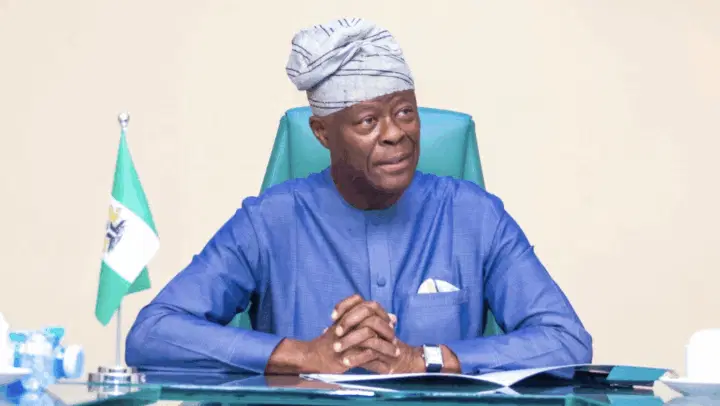
Minister of Finance and Coordinating Minister of the Economy, Wale Edun, said the Federal Government has activated a series of measures aimed at stabilising the economy amid the global shock triggered by the conflict involving the United States, Israel, and Iran.
According to him, the government is ramping up crude oil production, maintaining a liberalised foreign exchange framework, and strengthening its naira-for-crude policy to cushion the impact on households and businesses.
Edun noted that Nigeria is entering the current wave of uncertainty in a stronger position compared to previous global shocks such as the COVID-19 pandemic and the Russia-Ukraine war, citing reforms introduced since 2023.
The crisis has already triggered sharp volatility in global oil markets, with Nigeria’s Bonny Light crude rising from around $70 per barrel to over $110, driven largely by disruptions in the Strait of Hormuz—a critical global energy corridor.
While higher oil prices could boost Nigeria’s foreign earnings, Edun warned that the situation also poses significant risks, particularly through rising fuel costs, shifting capital flows, and increased global logistics expenses.
Petrol prices in Nigeria have surged by more than 50 per cent, while diesel prices have jumped by over 70 per cent, placing additional pressure on businesses and households already grappling with inflation.
Economic analysts caution that the apparent stability of the naira may be masking deeper vulnerabilities. Market expert Lukman Otunuga said the currency’s resilience has come at a cost, with Nigeria’s foreign reserves declining steadily amid sustained interventions by the Central Bank of Nigeria.
He noted that global investor sentiment has become increasingly risk-averse, with capital flows shifting away from emerging markets like Nigeria due to geopolitical tensions.
Further concerns have been raised over Nigeria’s trade and revenue systems. Former Vice President of the Association of Nigerian Licensed Customs Agents, Kayode Farinto, warned that inefficiencies in new trade platforms could drive up costs for importers, which would ultimately be passed on to consumers.
Similarly, financial analyst David Adonri pointed out that Nigeria’s dual position as both an oil producer and importer limits its ability to fully benefit from rising crude prices.
He explained that despite increased global oil prices, reliance on imported refined products continues to dilute potential gains, leaving the economy exposed to inflationary pressures.
Analysts also warn that prolonged disruptions in global shipping routes and energy supply chains could further increase import costs, intensifying inflation across key sectors of the economy.
Despite these risks, government officials insist that ongoing reforms have improved Nigeria’s economic flexibility, allowing it to better absorb external shocks.
However, experts maintain that while current measures may provide short-term relief, long-term stability will depend on strengthening domestic production, improving trade efficiency, and reducing reliance on imports.