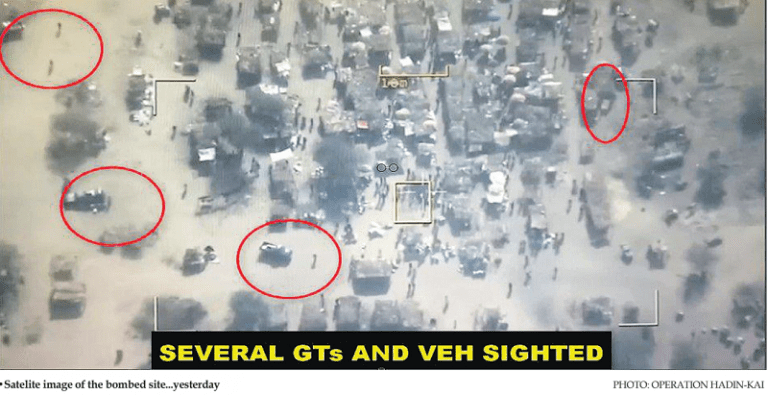
The Nigerian government has defended the recent airstrike on Jilli, a border community between Yobe and Borno states, insisting the operation was deliberate and targeted at terrorist elements, not civilians.
The Presidency said intelligence reports had long identified the area, commonly referred to as Jilli Market, as a major operational base for insurgent groups including Boko Haram and ISWAP.
Senior presidential aide Tope Ajayi described the location as a “legitimate military target,” arguing that it had evolved from a civilian trading hub into a logistics and coordination centre for insurgents.
The airstrike, carried out by the Air Component of Operation HADIN KAI on April 11, has sparked widespread concern following reports of civilian casualties.
However, the Yobe State Government backed the Federal Government’s position, maintaining that the operation was intelligence-driven and intentional.
In a statement issued by Dahiru Abdulsalam, security adviser to Governor Mai Mala Buni, authorities insisted the strike was aimed at dismantling a known terrorist enclave in Gubio Local Government Area of Borno State.
“It must be clearly stated that the airstrike was not a mistake,” the statement noted, even as it acknowledged that some civilians, including traders from Geidam in Yobe State, were inadvertently affected.
Injured victims were reportedly evacuated to medical facilities for treatment.
The Presidency also responded sharply to criticism from former Vice President Atiku Abubakar, who had questioned the operation and raised concerns over civilian deaths.
Presidential spokesman Sunday Dare described Atiku’s remarks as “misleading and detrimental,” warning that such comments could undermine military morale and embolden insurgents.
He argued that referring to the location purely as a civilian marketplace misrepresented its current status, insisting it had become part of the insurgents’ supply chain network.
Despite the official stance, calls for an independent investigation have continued to grow.
Former Senate President Ahmad Ibrahim Lawan expressed concern over reports that more than 100 civilians may have been killed, urging a transparent probe into the incident.
Lawan said the victims deserve justice and called on authorities to provide medical support for survivors and compensation for affected families.
Similarly, former Anambra State Governor Peter Obi condemned the loss of civilian lives, stressing the need for improved military capacity and coordination.
He noted that such incidents often reflect operational challenges, including gaps in intelligence coordination and limitations in defence equipment.
Obi urged the Federal Government to invest in modern military hardware, enhance training for personnel, and strengthen collaboration among security agencies to prevent future occurrences.
The incident has once again highlighted the delicate balance between aggressive counter-insurgency operations and the protection of civilian lives in Nigeria’s conflict-affected regions.
While the government maintains that the strike was justified, public scrutiny is likely to intensify as more details emerge.