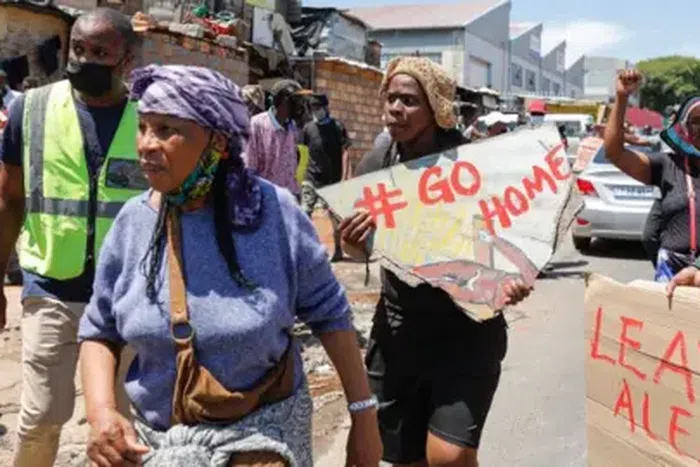
Tensions around xenophobia in South Africa have intensified after a viral video showed a woman calling on Nigerians and other foreign nationals to leave the country with their families.
The remarks, widely shared across social media, have sparked outrage and renewed concerns about the safety of migrant communities, particularly Nigerians living in the country.
In the video, the woman urged South African women married to Nigerian men to relocate with their husbands and children, suggesting that foreign families should not remain in the country.
“If a man loves you, he must take you back to where he’s coming from… let them go with their wives and their kids,” she said.
Backlash and Rising Concerns
The comments have drawn sharp criticism online, with many describing them as discriminatory and dangerous, especially for mixed-nationality families and children born in South Africa.
Observers warn that such rhetoric could inflame tensions and contribute to a hostile environment for foreign nationals.
The development comes amid ongoing activities linked to Operation Dudula, a group known for campaigning against undocumented migrants and advocating stricter controls on access to public services.
Impact on Schools and Families
Reports indicate that the situation is beginning to affect schools, where foreign pupils are increasingly feeling the impact of anti-immigrant sentiment.
Families have expressed concern that children are becoming unintended targets in a broader wave of hostility.
Education authorities have reiterated that all children have the right to education, regardless of nationality, warning that any attempt to deny access would violate established laws and protections.
A Growing Climate of Fear
The combination of inflammatory rhetoric and grassroots mobilisation has created an atmosphere of uncertainty for many African migrants, including Nigerians who make up a significant portion of the foreign population in South Africa.
The country has a long history of xenophobic violence, often linked to economic pressures, unemployment, and competition for limited resources.
However, analysts note that recent developments suggest a shift, with rhetoric increasingly targeting families and children rather than just individuals.
Calls for Stronger Action
While the government has consistently condemned xenophobic attacks and pledged to maintain law and order, critics argue that more decisive action is needed to address hate speech and protect vulnerable communities.
For many affected families, the immediate concern remains safety, as fears grow over how online rhetoric could translate into real-world consequences.