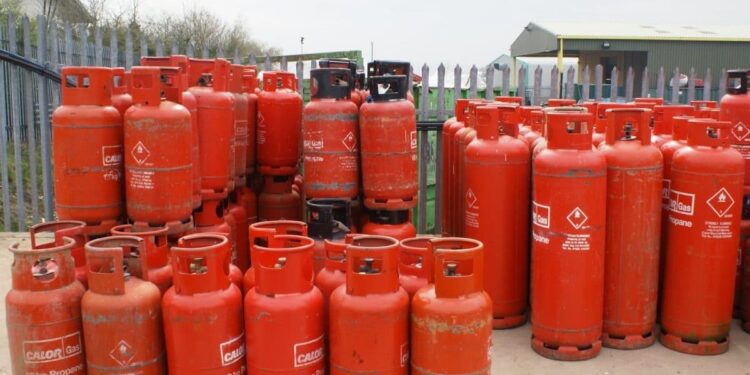
Households across Nigeria are facing rising energy costs after the price of cooking gas recorded a sharp increase in March 2026.
Latest data from the National Bureau of Statistics (NBS) shows that the average cost of refilling a 5kg cylinder climbed to ₦7,655.73, while a 12.5kg cylinder rose to ₦19,652.83.
The figures, contained in the NBS Liquefied Petroleum Gas (LPG) Price Watch, highlight growing inflationary pressure on household energy expenses.
Prices Rise Across the Board
According to the report, the average price for a 5kg refill increased by 12.60% month-on-month, up from ₦6,799.18 recorded in February.
On a year-on-year basis, prices rose by 4.55% compared to ₦7,322.49 in March 2025.
State-by-state data shows wide price disparities:
Kaduna State recorded the highest average price at ₦9,212.21
Lagos State followed at ₦8,909.73
Taraba State posted ₦8,802.78
Meanwhile, the lowest prices were recorded in:
Bauchi State – ₦6,295.40
Osun State – ₦6,457.35
Ondo State – ₦6,598.10
Regionally, the North-West recorded the highest average price, while the South-South posted the lowest.
12.5kg Cylinder Sees Steeper Increase
The cost of refilling a 12.5kg cylinder rose even faster, increasing by 15.62% month-on-month from ₦16,997.94 in February.
On a yearly basis, prices climbed by 6.48% compared to March 2025 figures.
Top states with the highest refill costs include:
- Nasarawa State – ₦23,418.12
- Kaduna State – ₦23,030.52
- Akwa Ibom State – ₦22,816.74
While the lowest prices were recorded in Bauchi, Osun, and Ondo states.
Global Factors Driving the Surge
The increase in cooking gas prices is linked to broader global and domestic pressures.
Ongoing tensions in the Middle East and uncertainties around the Strait of Hormuz have pushed energy prices higher worldwide, raising supply concerns.
These global dynamics, combined with exchange rate fluctuations, logistics costs, and import-related expenses, continue to drive up domestic LPG prices.
Impact on Nigerian Households
Rising gas prices are adding to existing financial strain on households already dealing with high food and transportation costs.
Experts warn that sustained increases could reverse gains made in the adoption of cleaner cooking energy.
Abuja-based policy analyst Ade Adebulu noted that higher LPG costs may worsen energy poverty, forcing some households to revert to firewood and kerosene.
“The rising cost of distribution and imports is feeding directly into retail prices across states,” he said.
Inflation Concerns Persist
The surge in cooking gas prices comes as inflation remains a major concern in Nigeria.
Recent data shows the country’s inflation rate rose to 15.38% in March 2026, up from 15.06% in February.
While the Central Bank of Nigeria (CBN) projects inflation could ease to an average of 12.94% in 2026, rising energy costs may complicate that outlook.