


Nigeria’s Federal Executive Council (FEC) has approved infrastructure projects worth over N7 trillion, marking one of the largest single approvals for road construction in the country’s history.
The projects, which cut across all six geopolitical zones, include major highways, bridge reconstructions, and strategic economic corridors aimed at boosting connectivity and national development.
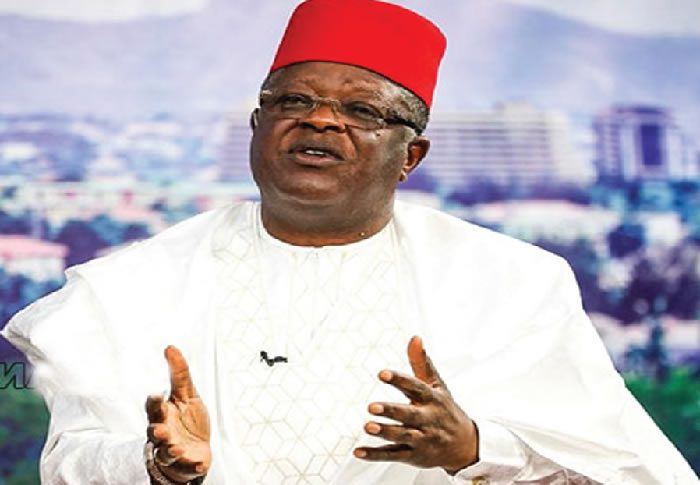
Minister of Works, David Umahi, disclosed the approvals after a council meeting, noting that the projects align with the infrastructure agenda of President Bola Ahmed Tinubu.
Key Projects Approved
Among the headline projects is a N1.86 trillion extension of the Lagos-Calabar Coastal Highway through Akwa Ibom State, described as one of the most technically challenging sections due to swampy terrain.
The council also approved N548.98 billion for the complete demolition and reconstruction of the Carter Bridge in Lagos after structural assessments confirmed severe deterioration.
Another major approval includes a N1.79 trillion section of the Sokoto-Badagry Expressway, a 360-kilometre corridor expected to be partly funded through external financing and operated as a toll road.
Reviving Abandoned and Delayed Projects
Umahi revealed that the government has restructured several inherited projects that failed to deliver results.
One such project is the Suleja-Minna road, previously handled under a tax credit scheme but stalled for years. The project has now been split into two contracts worth N91 billion and N93 billion, respectively.
The reconstruction of the Mando-Birnin Gwari road in Kaduna State, valued at N178.12 billion, was also approved, fulfilling a campaign promise tied to improving northern connectivity.
Why Carter Bridge Must Be Rebuilt
The Minister explained that multiple engineering investigations carried out over the years confirmed that the Carter Bridge had reached a critical structural stage.
He noted that underwater components had deteriorated significantly, making rehabilitation impossible.
The new design will expand the bridge from 1.525 kilometres to 1.93 kilometres, including additional flyover ramps to reduce traffic congestion.
Strategic Economic Impact
The government says the projects are designed to stimulate economic growth, improve logistics efficiency, and create jobs nationwide.
According to Umahi, the cost of the Sokoto-Badagry Expressway—estimated at N3.2 billion per kilometre—compares favourably with previous projects like the Abuja-Kano highway.
He also disclosed that the project attracted strong international investor interest, with financing offers exceeding expectations.
Additional Projects Across States
Other approved projects include:
Ibadan–Ijebu-Ode road dualisation (N295bn)
Oshogbo–Akoda–Bunga road (N101bn)
Oshogbo–Iwo–Ibadan road (N114bn)
Yobe–Gombe road project valued at N1.25 trillion
In the South-South region, a Bodo-Bonny road extension valued at N151 billion was also approved to improve access to key oil and gas infrastructure.
Projects Ready for Commissioning
Umahi further revealed that several completed projects will be commissioned ahead of Tinubu’s third anniversary in office.
These include sections of the Lagos-Calabar Highway, the Abuja-Kaduna road corridor, and multiple bridge and expressway upgrades nationwide.
Outlook
The scale of the approvals signals an aggressive push by the Federal Government to address Nigeria’s infrastructure deficit.
Analysts say the success of these projects will depend heavily on execution speed, funding transparency, and long-term maintenance strategies.