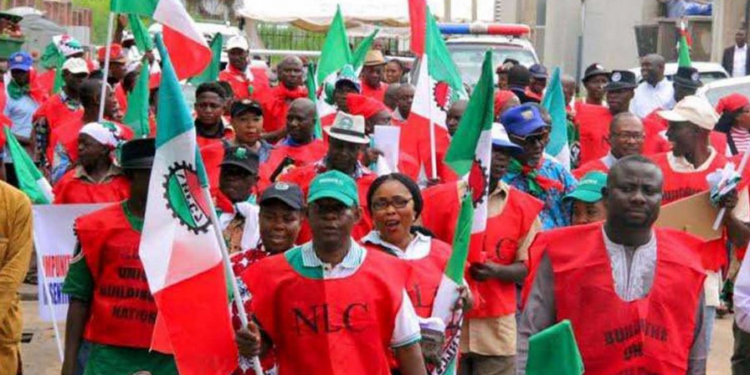
The Nigeria Labour Congress (NLC) Lagos State Council has called for a significant increase in the state’s minimum wage, proposing a new benchmark of N225,000 amid rising inflation and economic hardship.
The demand was announced by the council’s chairperson, Funmi Sessi, during the 2026 Workers’ Day celebration held at Mobolaji Johnson Arena.
Current Wage No Longer Sustainable — NLC
According to the union, the existing N85,000 minimum wage has lost its value due to persistent inflation and the rising cost of living.
Labour leaders noted that workers are struggling to afford essential needs, including:
Food
Housing
Transportation
Healthcare
Education
The union warned that without an urgent wage adjustment, workers will remain under severe financial pressure.
Inflation Erodes Workers’ Purchasing Power
The NLC linked its demand to Nigeria’s inflation rate, currently estimated at about 15.38%, which has driven up the prices of goods and services.
The union stressed that the rapid increase in living costs has significantly weakened workers’ purchasing power, making it difficult for many households to stay afloat.
Call for Industrial Harmony
Labour leaders argued that revising the wage structure would not only improve workers’ welfare but also help maintain industrial peace.
They urged the Lagos State Government to act promptly to avoid potential labour disputes.
Security Concerns Also Raised
Beyond economic issues, the union highlighted growing insecurity as a threat to productivity and worker safety.
The NLC called on both federal and state authorities to strengthen security measures to protect lives and sustain economic activities.
Government Commended for Infrastructure Projects
Despite its concerns, the union acknowledged ongoing infrastructure development in Lagos, including investments in:
- Rail transportation
- Road networks
- Urban mobility projects
These initiatives, according to the NLC, contribute to economic growth and improved living standards.
Background: Previous Wage Adjustment
The Lagos State Government approved the current N85,000 minimum wage in October 2024 under the administration of Babajide Sanwo-Olu.
The policy, implemented in November 2024, aimed to cushion the effects of inflation. However, labour leaders now argue that economic realities have outpaced the adjustment.
Wage Pressure Rising Nationwide
Recent data shows that minimum wage levels vary across Nigerian states, reflecting differences in fiscal capacity and cost of living.
However, inflation and economic challenges are driving similar wage demands across the country as workers push for better compensation.