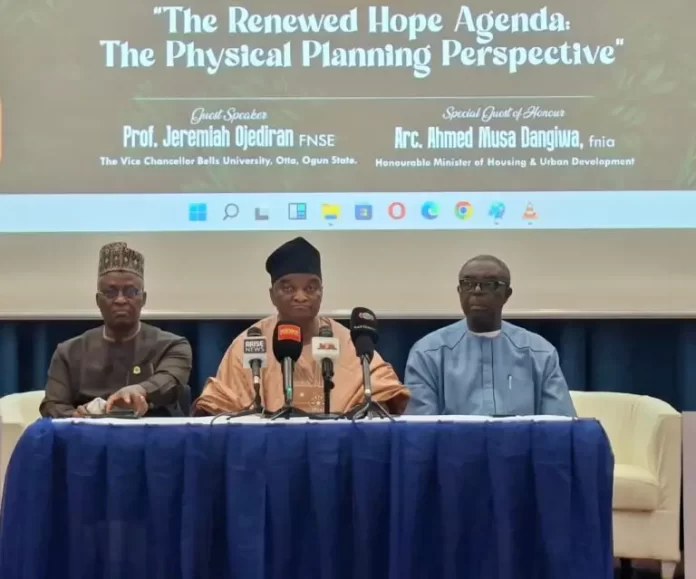
The Nathaniel Atebije Foundation for Planning Advocacy (NAFPA) has called for urgent national attention to the growing crisis in urban and regional planning across Nigeria, warning that continued neglect could undermine sustainability, safety, and human dignity.
The foundation’s founder, Nathaniel Atebije, made the call during a news conference ahead of its maiden annual lecture held on Tuesday in Abuja.
‘Planning Is Not a Luxury’
Atebije stressed that urban and physical planning is essential for sustainable growth, cautioning that its neglect has already led to disorder in many Nigerian cities.
“When planning is ignored, cities become disordered, unsafe, inefficient and unjust. Unfortunately, this trajectory is the experience across many parts of Nigeria today,” he said.
Key Challenges Identified
He listed major challenges affecting urban development, including weak enforcement of planning regulations, widespread land-use violations, and the marginalisation of indigenous planning professionals.
Other concerns include the destruction of green areas in Abuja and inadequate infrastructure across urban centres.
According to him, many settlements continue to expand without approved layouts, resulting in chaotic growth patterns that are costly and difficult to correct.
He added that even in cities with master plans, implementation remains weak due to poor funding, limited manpower, and lack of political will.
Rising Threat to Abuja Master Plan
Atebije warned of increasing development on restricted lands such as floodplains and designated green areas, often driven by profit motives and political interference.
He noted that this trend is gradually eroding the Abuja Master Plan, which was originally designed to balance development with environmental sustainability.
“The destruction of designated green spaces in the capital city is particularly alarming, raising serious concerns about environmental sustainability and urban livability,” he said.
Implications for Urban Living
He said the consequences of poor planning are already visible, including declining living standards, rising environmental risks, housing shortages, and reduced economic productivity.
Call for Immediate Reforms
The foundation called for decisive action from government and stakeholders, including strict enforcement of planning laws and restoration of violated green areas.
Atebije urged authorities to prioritise planning as a prerequisite for development and to make physical development plans legally binding.
He also recommended strengthening development control through recruitment and training of qualified personnel, alongside adequate funding for enforcement agencies.
“Planning authorities must be protected from political interference, with enforcement of sanctions against violations,” he said.
Push for Institutional Strengthening
The foundation further called for better coordination among planning institutions and the promotion of indigenous professionals in line with existing policy frameworks.
It also advocated the establishment of a National Urban and Regional Planning Commission and the Office of the Town Planner General of the Federation to improve oversight and ensure compliance with planning standards.
Outlook
Atebije emphasised that Nigeria stands at a critical point in its urban development journey, warning that failure to act could deepen existing challenges.
He called on government, private developers, and stakeholders to collaborate in restoring order, sustainability, and dignity in the country’s built environment.