
The informal land market is attracting increasing attention from real estate investors in Nigeria, driven by its speed, flexibility, and lower transaction costs compared to the formal system.
A report by Northcourt Real Estate notes that both formal and informal land markets exist in Nigeria, but they operate under very different frameworks. While the formal system is governed by state law and registration processes, the informal market operates largely outside official regulatory structures.
Weak Formal System Drives Informal Market Growth
According to the report, Nigeria’s formal land system is often slow, rigid, and complex, making it less attractive to investors seeking quick transactions.
It also noted that only about 5 per cent of Nigeria’s land mass is formally registered, leaving as much as 95 per cent as “dead capital” that cannot be easily used for collateral, mortgages, or formal investment.
In contrast, the informal market offers quicker access to land, wider location choices, and more affordable prices, especially in fast-growing urban areas.
The report added that in some cases, government-backed regularisation programmes later help buyers convert informal holdings into legally recognised property.
Structural Barriers Shape Investor Preference
The report attributed the dominance of informal transactions to outdated regulations, rigid planning systems, and centralised land administration processes.
It noted that when formal systems fail to allocate land efficiently, individuals and investors naturally turn to alternative channels where transactions are faster and more accessible.
Land remains a highly valuable but passive asset, with strong demand across residential, commercial, agricultural, and industrial uses, particularly in urban centres.
Urban Expansion Reshaping Agricultural Land
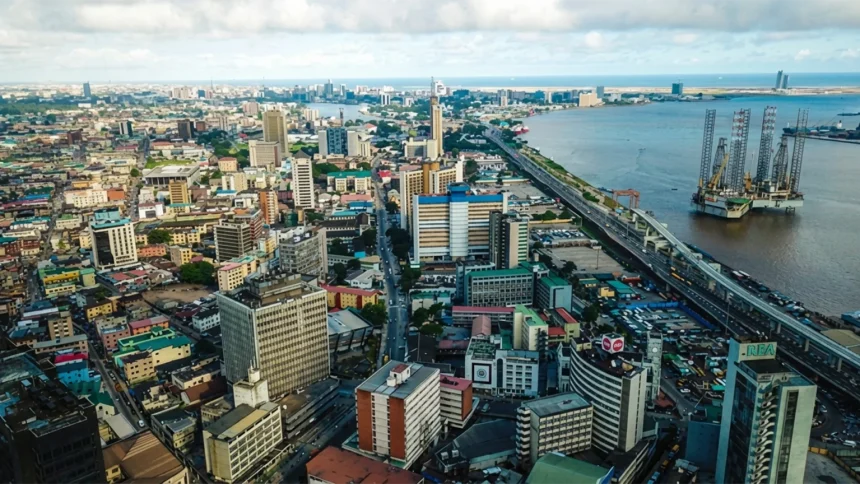
The report also highlighted the growing pressure of urbanisation on agricultural land, particularly in Lagos and other major cities.
It cited research showing that farmland in Lagos has steadily declined over the past four decades, while built-up areas expanded significantly.
Between 1984 and 2024, developed land increased by over 22,000 hectares, while farmland and natural landscapes declined at varying rates depending on the period.
From 2013 to 2024, farmland loss accelerated further, with sharper declines recorded in forest cover, open spaces, shrublands, and water bodies.
Rising Land Prices Linked To Scarcity
The continued conversion of farmland and open spaces into residential and infrastructure developments has intensified pressure on available land, contributing to rising land prices across urban centres.
Urban farming, once seen as a viable livelihood option in cities like Lagos, is also declining due to increasing land demand for housing and commercial projects.
Experts note that although urban agriculture is gradually gaining recognition, competing development pressures continue to push agricultural land into residential and industrial use.