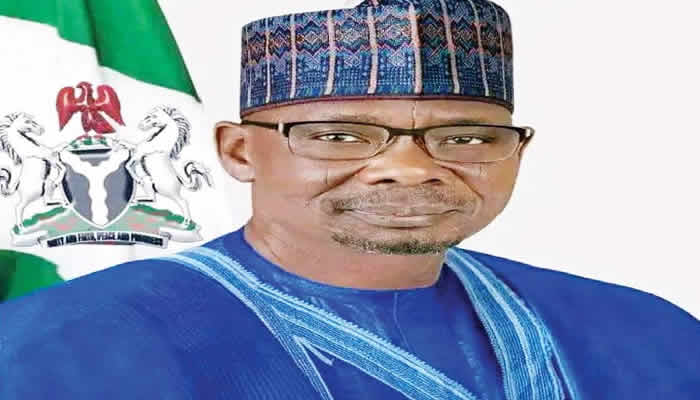
Governor Abdullahi Sule of Nasarawa State says Nigeria possesses enough domestic liquidity to bridge its infrastructure deficit if transparent structures are put in place to attract investors.
Sule made the statement on Thursday in Abuja while delivering the keynote address at the 2026 Infrastructure Dialogue themed “Building Nigeria’s Future: The Strategic Role of DFIs and Capital Markets in Infrastructure Financing and Economic Development.”
He argued that Nigeria’s challenge is not lack of funds, but the absence of trust-driven systems capable of mobilising and securing available capital.
Dangote Refinery Cited as Proof of Local Capital Strength
Drawing from his experience as former Group Managing Director of Dangote Refinery, the governor said Nigeria’s private sector holds significant untapped liquidity.
He pointed to the refinery as evidence that large-scale investments could be easily financed domestically if structured transparently.
“Nigeria has so much money. If they decide to sell 30 per cent of a 20-billion-dollar enterprise, that capital will be oversubscribed,” he said.
Sule explained that investors focus more on transparency, trust and returns on investment than physical assets.
Nasarawa’s Economic Transformation Strategy
The governor said Nasarawa State has applied this investment-driven model to reposition its economy from a civil service base to an emerging industrial hub.
He disclosed that an executive order requiring solid mineral companies to process raw materials locally has attracted major lithium processing investments into the state.
According to him, these policies have significantly boosted internally generated revenue, which rose from ₦7 billion in 2019 to about ₦36 billion currently.
Sule also noted that the state avoided foreign loans to reduce exposure to exchange rate risks, focusing instead on blocking leakages and expanding infrastructure to support mining and agriculture.
Experts Highlight $30 Trillion Infrastructure Gap
Convener of the dialogue and Managing Partner of Deutsche Partners Holdings, Dr Onuoha Nnachi, said Nigeria faces an estimated $30.1 trillion infrastructure deficit as of 2024.
He explained that 62 per cent of the gap lies in economic infrastructure, which can be financed by the private sector due to its commercial viability.
Nnachi stressed that government budgets alone are insufficient and recommended that the public sector prioritise social infrastructure such as education and healthcare.
Call for Private Sector-Driven Infrastructure Financing
Participants at the dialogue called for a shift toward blended finance models, green bonds and capital market instruments to close Africa’s infrastructure gap, estimated at $100 billion annually.
Governor Agbu Kefas of Taraba State, represented by Commissioner for Agriculture Prof. Nicholas Namessan, described infrastructure as the backbone of economic and social development.
He emphasized the need for stronger collaboration between government and private investors.
Security Key to Sustainable Development
The Inspector-General of Police, Olatunji Disu, represented by CP Justin Obiora, said insecurity remains a major threat to infrastructure development.
He noted that the Nigeria Police Force is adopting technology-driven policing, including surveillance systems along critical infrastructure corridors, to prevent vandalism and sabotage.