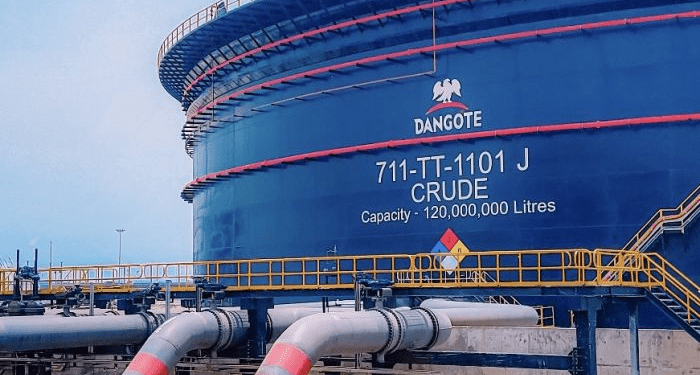
Dangote Petroleum Refinery has announced a reduction in the ex-depot price of aviation fuel (Jet A1), lowering it from ₦1,750 to ₦1,650 per litre in a move aimed at easing pressure on airline operators in Nigeria.
The refinery disclosed the adjustment in a statement on Monday, noting that the decision is part of ongoing efforts to stabilise fuel supply and reduce operational costs within the aviation sector.
The development comes at a time when rising aviation fuel prices continue to weigh heavily on domestic airlines and contribute to increased airfares across the country.
The company also announced a 30-day interest-free credit facility for marketers and airline operators, backed by bank guarantees, as part of measures to improve liquidity within the sector.
According to the refinery, it is also transitioning from a dollar-denominated pricing model to a naira-based structure for Jet A1 transactions, a shift it said is designed to strengthen local market stability.
“This is in addition to a 30-day interest-free credit facility backed by bank guarantees for marketers and airline operators and a shift from a dollar-denominated pricing structure to a naira-based model,” the statement noted.
The refinery explained that these initiatives are intended to support Nigeria’s aviation value chain, which has been under pressure due to rising operational costs and fluctuating fuel prices.
The reduction is expected to provide some relief to airlines, many of which have repeatedly raised concerns over the high cost of Jet A1, one of the biggest components of their operating expenses.
Several domestic carriers have warned that sustained fuel price increases could force them to reduce flight frequency, adjust routes, or further increase ticket prices.
Industry stakeholders say the latest price cut could help improve airline cash flow and potentially moderate domestic airfares if sustained.
The Federal Government has also been engaged in discussions with aviation stakeholders in recent months in a bid to prevent fuel supply disruptions and stabilise the sector.
Earlier interventions by regulators included proposals to cap jet fuel prices and introduce credit support mechanisms for struggling operators.
In April 2026, Nigerian airlines had threatened a nationwide suspension of operations following a sharp increase in Jet A1 prices, which had climbed above ₦3,000 per litre at some point.
The rise in aviation fuel costs has been linked partly to global supply pressures, including geopolitical tensions affecting energy routes such as the Strait of Hormuz, a key channel for global crude shipments.
While local sourcing has helped cushion some supply challenges, international pricing benchmarks continue to influence landing costs for aviation fuel in Nigeria.