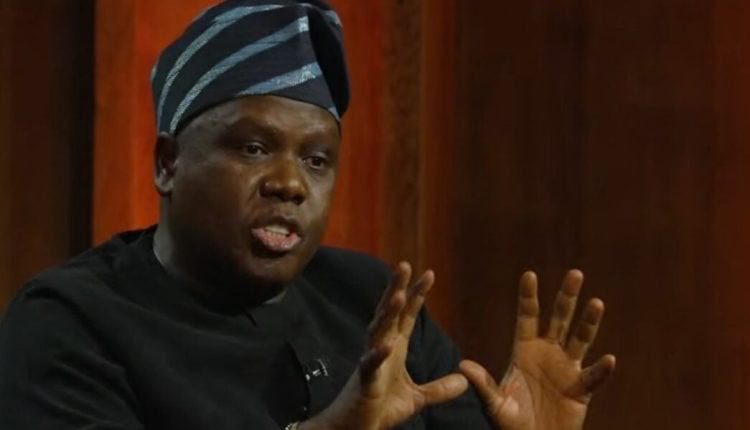
A presidential aide on Policy Communication, Daniel Bwala, has stated that Nigerians are constitutionally empowered to defend themselves when faced with life-threatening attacks, amid rising insecurity concerns across parts of the country.
Bwala made the remarks during a live interview on Arise Television on Wednesday, where he addressed growing public anxiety over repeated violent attacks and kidnappings.
His comments came shortly after an attack in the Ahoro-Esinele community in Orire Local Government Area of Oyo State, where armed assailants reportedly abducted teachers and students from three schools, with one victim later confirmed killed.
According to him, the Nigerian Constitution guarantees every citizen the right to self-defence in situations where life is under threat.
“The constitution has guaranteed to every citizen of Nigeria the right to self-defence; you have the right to defend yourself,” he said.
He further explained that collective defence is also implied when individual rights are considered together.
“When your right, my right, and that of my neighbour is put together, it becomes collective rights to defend ourselves,” he said, adding that Nigerians are within their rights to protect themselves against imminent danger.
Bwala, however, clarified that the right to self-defence does not extend to unrestricted access to weapons, stressing that the use and possession of arms remain regulated under Nigerian law.
“Nigerians don’t have the right to bear certain arms unless those arms are permitted,” he said, noting that citizens must operate within the limits of existing firearms regulations.
He added that communities can, where necessary, seek official approval to organise structured self-protection mechanisms under government supervision.
Speaking more broadly on insecurity, the presidential aide described crime as a global challenge that cannot be eliminated solely by government action without citizen involvement.
“Solution is what we all look to; evil men operate anywhere in the world, no matter how tight you are as a government,” he said.
Bwala emphasised the importance of collaboration between citizens and security agencies, noting that intelligence sharing and community participation remain critical in tackling insecurity.
“You do your best and expect that with the help of God and collective participation of the people through collective intelligence, we will be able to put an end to it,” he said.
He acknowledged public frustration over recurring attacks, saying emotional reactions to such incidents are understandable given the loss of lives.
“I know the Nigerian people will continue to complain… people will complain, cry and mourn because it’s the lives of the Nigerian people that are taken away,” he said.
Bwala also observed that insecurity often intensifies during election cycles, attributing the trend to what he described as opportunistic exploitation of crises by certain actors.
“Every eve of elections in Nigeria from 2014, 2018, 2022, and now 2026, you will see that crisis increases because of the idea of a crisis economy,” he said.
He further highlighted the role of community-based security structures, including vigilante groups supporting formal security agencies through intelligence gathering.
“As a people, we have vigilantes, and in Borno State, we have paramilitary organisations that provide intelligence to law enforcement,” he said.
Bwala concluded by stressing that ending insecurity requires a combined effort of government action, community participation, and sustained national coordination.