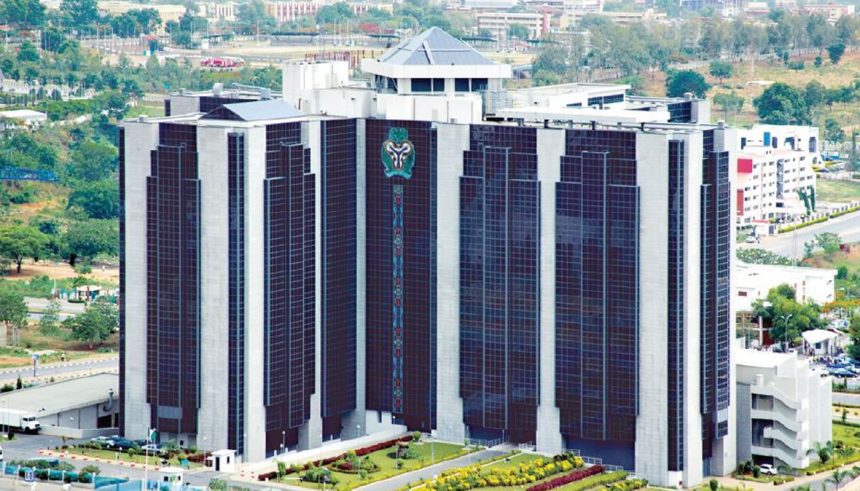
The Central Bank of Nigeria’s (CBN) monetary policy decisions continue to shape financial market conditions, as the apex bank maintains a tight stance aimed at stabilising the naira while inadvertently slowing credit expansion and business growth.
Although exchange rate stability remains a key priority, analysts say the prolonged high-interest-rate environment is creating significant pressure on corporate lending and economic activity.
CBN Holds Rates at 26.5% Amid Inflation Concerns
Following its Monetary Policy Committee (MPC) meeting, the CBN maintained the Monetary Policy Rate (MPR) at 26.50 percent, signalling a pause in its aggressive rate-hiking cycle.
Investment analysts at Meristem Securities Limited warn that this decision reinforces a “higher-for-longer” interest rate environment, which will continue to restrict access to credit across sectors of the economy.
Credit Conditions Remain Tight for Businesses and Households
According to analysts, the elevated interest rate level is making borrowing increasingly expensive for both businesses and individuals.
Many firms are now delaying expansion plans, capital projects, and operational investments due to high financing costs.
Households are also reducing borrowing, especially for discretionary spending, as loan repayments become less affordable.
Meristem analysts noted that:
“High cost of borrowing is expected to keep credit creation relatively weak as both lenders and borrowers remain cautious amid still-tight financial conditions.”
Banks Shift Focus to Treasury Income
While the tight monetary environment is slowing lending, it is benefiting commercial banks in other ways.
Banks are expected to record stronger earnings from:
- Government securities
- Treasury bills
- Repriced interest-bearing assets
However, analysts say credit growth will remain weak as risk-averse lending behaviour continues across the financial system.
This means bank profitability is likely to rely more on fixed-income investments than traditional loan expansion.
CBN Defends Tight Monetary Policy
CBN Governor Olayemi Cardoso defended the decision to maintain a restrictive monetary stance, saying exchange rate stability remains essential to controlling inflation.
He noted that recent inflation increases were driven largely by external shocks and described them as temporary.
According to him:
“The centrepiece of our toolkit is ensuring that our foreign exchange rate remains stable.”
Liquidity Flows Into Government Securities
With limited credit expansion in the real economy, excess liquidity is increasingly moving into safer government instruments such as Treasury bills and bonds.
Analysts expect continued strong demand at bond auctions, even as yields remain elevated due to inflationary pressures and government borrowing needs.
Outlook for Investors
Market analysts advise investors to adopt a cautious and selective strategy in the current environment.
They recommend focusing on:
- Strong, defensive stocks
- Companies with stable earnings
- Firms with reliable dividend payouts
In fixed-income markets, continued demand for government securities is expected to support liquidity flow.