


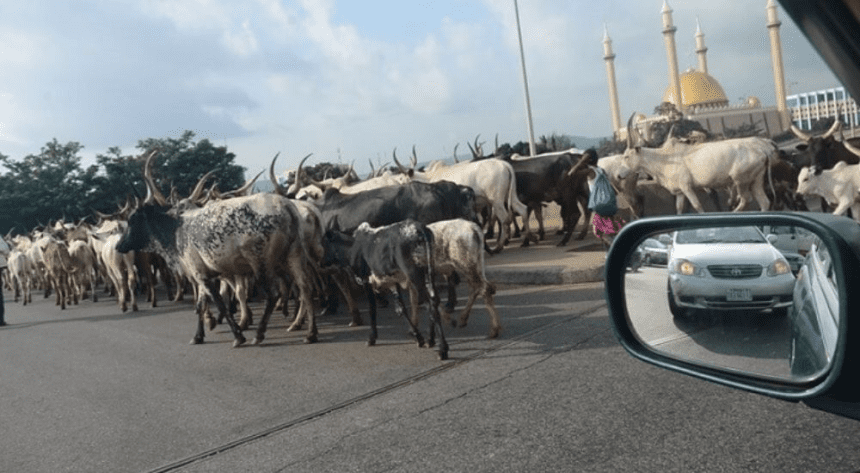
Ten years after the Federal Capital Territory Administration (FCTA) designated 9,000 hectares of land in Kawu, Bwari Area Council, for a grazing reserve, affected communities have accused authorities of failing to pay compensation while allowing widespread encroachment on their ancestral lands.
The grazing reserve initiative was announced in 2016 by former FCT Minister, Muhammad Bello, following complaints about cattle grazing within Abuja city and along major highways. The policy was aimed at relocating herders from the city centre to designated grazing reserves across the territory.
Under the arrangement, the FCTA earmarked 33,485 hectares across Paikon Kore, Karshi, Kawu, and Rubochi to accommodate an estimated seven million cattle.
Communities Allege Encroachment, Loss of Farmlands
Residents of Kurmi Dauda and other affected communities said the relocation policy has resulted in increasing land disputes, destruction of farmlands, and loss of livelihoods.
The Chief of Kurmi Dauda, Musa Manasseh Bawa, alleged that herders have continued to occupy farmlands, claiming the government allocated the land to them.
According to him, residents frequently wake up to discover that their cultivated lands have been taken over without consultation or official documentation.
Bawa lamented that farming activities, including the cultivation of beans, yam, banana, and other crops, have been severely affected, while some economic trees have reportedly been destroyed by grazing cattle.
Government Returns With Development Projects
In September 2025, the Federal Government resumed activities at the Kawu Grazing Reserve as part of efforts to relocate herders and modernise livestock production.
The Minister of Livestock Development, Alhaji Idi Maiha, inaugurated a solar-powered borehole and announced plans for extensive infrastructure development, including roads, irrigation facilities, schools, healthcare centres, security installations, markets, and pasture production centres.
The minister described the project as a major intervention aimed at transforming the reserve into a modern livestock hub capable of supporting thousands of herders and their families.
Landowners Say They Were Excluded
Despite the government’s renewed investments, community leaders insist that they were neither consulted nor compensated before the land was converted into a grazing reserve.
Bawa stated that approximately 12 communities have ancestral claims to the affected land, with some villages still residing within the reserve while others continue to farm there.
He called on the FCTA to immediately demarcate the reserve to clearly define the boundaries between host communities and grazing areas.
According to him, proper demarcation would significantly reduce conflicts and prevent further encroachment.
Similarly, the Mai Angwa of Anguwan Rana, Yunana Bebe, appealed to the government to reduce the size of the grazing reserve and establish clear boundaries to ensure peaceful coexistence.
OIDA Raises Alarm Over Security Concerns
The Original Inhabitants Development Association of Abuja (OIDA) said repeated complaints to government authorities have yielded little response.
The association disclosed that it wrote several petitions to the FCT Administration and security agencies, warning that the influx of herders from neighbouring states had heightened tensions and security concerns in affected communities.
OIDA President, Pastor Danladi Jeji, warned that the situation could deteriorate into a major crisis if urgent action is not taken.
According to him, communities are becoming increasingly frustrated over what they perceive as injustice and neglect by relevant authorities.
FCTA Confirms Compensation Yet to Be Paid
Officials of the Department of Resettlement and Compensation of the Federal Capital Development Authority (FCDA) confirmed that compensation has not been paid to affected communities.
An official explained that compensation processes can only begin after the appropriate authority formally initiates the exercise and requests the department’s supervision.
However, no timeline was provided regarding when such payments might commence.
Livestock Ministry Distances Itself From Compensation
The Federal Ministry of Livestock Development acknowledged that the grazing reserve project remains a priority but stated that compensation issues fall outside its direct mandate.
The ministry said it continues to engage relevant authorities while developing frameworks to regulate access to the reserve and protect host communities.
However, it did not disclose specific timelines for resolving compensation claims or completing stakeholder engagements.
Legal Expert Cites Land Use Act
Legal practitioner Isaac Steven said the Land Use Act clearly outlines the government’s powers and obligations regarding land acquisition.
According to him, while Section 28 permits land revocation for overriding public interest, Section 29 mandates the payment of adequate compensation to affected landowners and occupiers.
He argued that if compensation has indeed not been paid, affected communities may have legal grounds to challenge the acquisition.
Steven advised community leaders to pursue dialogue with the FCT Administration while also exploring legal remedies if negotiations fail.
Growing Calls for Urgent Intervention
As infrastructure projects continue at the Kawu Grazing Reserve, community leaders are demanding immediate demarcation of the reserve, payment of compensation, and stronger safeguards to protect their remaining farmlands.
They warned that failure to address the grievances of host communities could further escalate tensions and undermine the objectives of the grazing reserve programme.