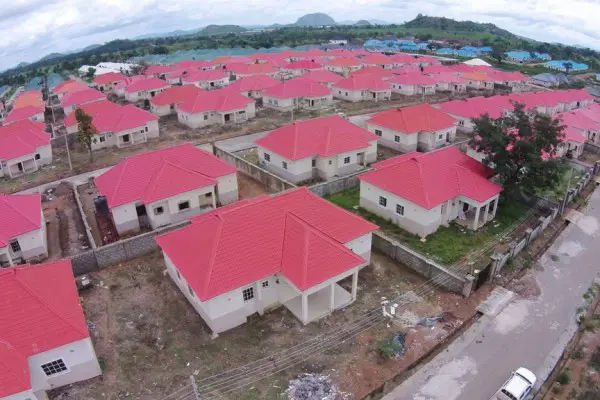
Lagos State’s growing housing crisis is being driven not only by inflation and rising construction costs but also by a complex web of permits, levies and regulatory charges that developers say are making housing increasingly expensive and inaccessible.
As Nigeria’s commercial capital continues to attract thousands of new residents annually, demand for accommodation has far outpaced supply. Estimates place Lagos’ housing deficit at about 3.4 million units, while rising inflation has significantly increased the cost of cement, iron rods, labour and other building materials.
However, industry stakeholders argue that beyond market forces, regulatory costs have become a major contributor to the affordability challenge.
Data from Lagos State’s budget performance reveals that agencies responsible for planning approvals and building regulation generate revenues that rival or exceed government spending on housing. In 2024, planning and building-related agencies were assigned revenue targets of about N151 billion, compared to the N55.92 billion budgeted for housing development.
Reports further indicate that Lagos generated approximately N80 billion from building approval fees between January and May 2025 alone, highlighting the scale of revenue derived from the approval process.
Developers say securing approval for construction projects involves navigating multiple agencies, paying various fees and complying with numerous regulatory requirements before a single block is laid.
Lagos-based developer, Olaoluwa Awolaja, described the process as lengthy and costly, noting that obtaining planning approval is only the beginning.
“Once you submit your drawings, that is where the real journey starts. You must secure approvals, structural certifications, inspections and stage certifications before construction can progress smoothly,” he said.
According to him, developers are often required to obtain environmental clearances, fire service approvals, survey verifications and title documentation, depending on the size and nature of the project.
Another developer, Bukola Ojo, recounted how a simple renovation project became delayed for months after officials demanded additional documentation and levy payments during construction.
She said the interruption increased project costs and created uncertainty, forcing contractors to leave the site while awaiting further approvals.
Industry stakeholders estimate that regulatory compliance alone can account for between 15 and 25 per cent of total project costs before construction expenses are considered.
The burden is ultimately transferred to buyers and tenants.
Across Lagos, residents continue to grapple with rising rents as landlords and developers adjust prices to reflect increasing development costs.
A tenant in Idimu, Blessing Adebayo, said her one-bedroom apartment rent increased from N450,000 to N1.5 million within two years, reflecting the growing pressure on housing affordability.
Experts say approval delays further worsen the situation by extending project timelines and increasing financing costs.
Sources familiar with the approval process disclosed that administrative restructuring and digitisation efforts have created a backlog, with some applications reportedly awaiting final approval for up to three months.
Real estate professionals argue that the combination of multiple levies, duplicated regulatory functions and prolonged approval timelines is discouraging investment in housing delivery.
The General Secretary of the Association of Real Estate Developers of Lagos State (AREDOLS), Ahmad Sanni, noted that developers face numerous charges, including planning fees, stage certification fees, emergency management levies, waste management charges and other statutory payments.
Similarly, President of the Real Estate Developers Association of Nigeria (REDAN), Akintoye Adeoye, criticised what he described as excessive approval requirements and high regulatory costs.
Legal experts have also raised concerns over overlapping charges imposed by different agencies, warning that some fees appear to cover similar regulatory functions under different names.
Stakeholders are now calling for comprehensive reforms, including a one-stop approval platform, consolidation of overlapping levies, transparent fee structures and full digitisation of permit processing.
They argue that simplifying the approval system would reduce delays, lower development costs and encourage greater investment in affordable housing.
With Lagos continuing to experience rapid urbanisation, experts warn that addressing regulatory bottlenecks may be essential to improving housing supply, stabilising rents and making home ownership more attainable for millions of residents.