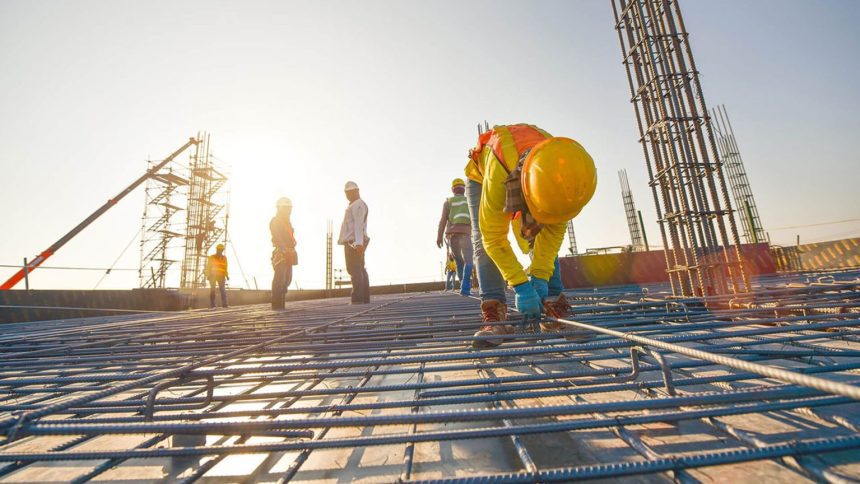
Nigeria’s housing and construction sector continues to face mounting pressure as the prices of building materials rise sharply, driven by inflation, exchange rate volatility, multiple taxation, high transportation costs and increasing production expenses.
A review of market prices shows that key construction materials, including cement, sand, stones and tiles, have recorded significant increases over the past year, with some products rising by more than 60 per cent and others nearly doubling in price.
A 50kg bag of cement, which sold for between N8,500 and N10,000 in 2025, now costs as much as N13,000 in several parts of the country, depending on location and supply conditions.
Similarly, the cost of sharp sand has risen dramatically from between N40,000 and N80,000 per tipper in 2025 to between N170,000 and N350,000, reflecting higher fuel, extraction and transportation costs.
The price of local stones has also climbed sharply, increasing from about N180,000 per tonne in 2025 to as much as N350,000 in some markets, further raising the cost of structural construction projects.
Finishing materials have not been exempt from the trend. A carton of locally manufactured tiles that previously sold for between N4,500 and N6,000 now costs between N7,500 and N8,500. Imported tiles have witnessed even steeper increases due to foreign exchange fluctuations, customs duties and rising import costs.
However, a few products have recorded slight reductions. Some paint manufacturers have marginally lowered prices due to weak demand from homeowners who have postponed renovation and repainting projects. A 20-litre container of emulsion paint, which previously sold for N18,000, now sells for about N17,200, while gloss paint has declined slightly from N20,000 to N19,900.
The persistent rise in building material costs has slowed housing development activities across the country, increased project delivery costs and forced many developers to delay or suspend construction projects.
Manufacturers of cement-based products, including roofing sheets, ceiling boards, paving stones and other concrete products, have also adjusted prices upward in response to rising input costs.
According to data from the National Bureau of Statistics (NBS), Nigeria’s inflation rate increased to 15.69 per cent in April 2026 from 15.38 per cent in March, highlighting continued pressure on production, logistics and distribution costs within the construction value chain.
Industry stakeholders have warned that unless inflation moderates, exchange rate stability improves and local production capacity expands, construction costs are likely to remain elevated, further worsening the nation’s housing deficit.
A landlord, Mr. Stanley Nnabuike, attributed the rising prices to foreign exchange instability and increasing operational costs.
“The exchange rate is not stable, and the high cost of fuel has increased the cost of building materials because companies use fuel to power production equipment. Labour costs have also gone up significantly,” he said.
He added that suppliers who purchased materials at higher costs are unable to lower prices without incurring losses.
A quantity surveyor and construction cost expert, Goodman Etiowo, blamed the situation on structural challenges within the building materials industry, particularly limited competition in cement production and Nigeria’s heavy dependence on imported materials.
According to him, increased competition among manufacturers would help reduce construction costs and improve affordability.
Etiowo also noted that imported products such as tiles, sanitary wares and POP fittings remain vulnerable to exchange rate fluctuations, which continue to push up prices.
Architect Kingsley Chilaka said rising material costs reflect broader weaknesses in Nigeria’s construction supply chain, including high import duties, production expenses and inadequate market regulation.
“Most of these companies are heavily taxed, including on imported building materials during the clearing process. By the time they incur such costs in production and importation, the burden is transferred to the end-users,” he said.
Chilaka also criticised the absence of effective price regulation, arguing that manufacturers and suppliers largely determine market prices without adequate monitoring mechanisms.
“There is no proper regulation. Different companies fix prices on their own and there is no effective monitoring system to stabilise the market,” he added.
Stakeholders warn that without targeted interventions to stabilise inflation, strengthen local manufacturing and address regulatory bottlenecks, the rising cost of building materials could further constrain housing delivery and deepen affordability challenges for millions of Nigerians.