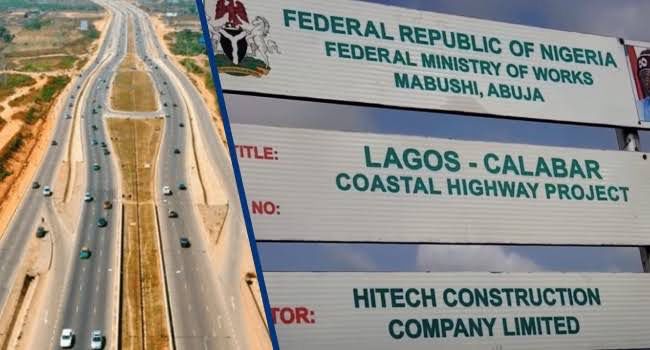
The Federal Government has announced a high-level stakeholders’ engagement on the Lagos-Calabar Coastal Highway as part of renewed efforts to address environmental concerns and improve flood management along the project corridor.
The meeting, scheduled for Tuesday, July 7, follows an inspection tour of completed and ongoing sections of the highway by the Minister of Works, David Umahi, alongside members of the National Assembly and officials from key government agencies.
According to a statement issued by the Director of Information and Public Relations at the Federal Ministry of Works, Mohammed Ahmed, the engagement will bring together the Senate and House Committees on Works, the Federal Ministry of Environment, the Office of the Surveyor-General of the Federation, the Lagos State Government, representatives of landlords’ associations, and other stakeholders.
The ministry said the meeting is aimed at addressing environmental concerns, promoting environmentally responsible practices, and strengthening collaboration on flood management around the highway corridor.
During the inspection, Umahi dismissed claims linking the Lagos-Calabar Coastal Highway to flooding in parts of Lagos, maintaining that the project was designed with modern drainage infrastructure to improve water flow and reduce flooding in shoreline communities.
The minister explained that the Federal Ministry of Works had already begun collaborating with the Lagos State Government on dredging activities and other environmental mitigation measures to tackle flooding in affected locations.
According to him, persistent flooding in many parts of Lagos is largely caused by indiscriminate refuse disposal, blocked drainage channels, obstructed manholes, and violations of environmental regulations by residents rather than the highway project itself.
“You can see people blocking manholes and creating hazards to the environment. Many complaints about flooding stem from human activities, not the road project,” Umahi said during the inspection.
He assured residents that the Federal Government would continue implementing remediation measures, including improved drainage systems, dredging operations, and strict enforcement of the approved right-of-way along the highway.
Umahi also warned that structures obstructing drainage channels or encroaching on designated setbacks would be removed to ensure effective flood control.
The minister noted that the Lagos-Calabar Coastal Highway incorporates modern engineering features such as culverts, embankments, and drainage systems specifically designed to manage stormwater and complement wider flood-control efforts across Lagos.
He said the inspection was conducted on the directive of President Bola Tinubu as part of the administration’s commitment to protecting lives, property, and critical infrastructure while promoting sustainable development.
To safeguard completed sections of the highway, Umahi directed the Federal Controller of Works in Lagos State, Engr. Olufemi Dare, to enforce environmental safety standards across the project.
He also announced the recruitment of 40 security and monitoring personnel—20 for daytime operations and 20 for night patrols—to prevent vandalism, theft of road infrastructure, and illegal refuse dumping along the highway.
Speaking at the inspection, the Senior Special Assistant to the President on Community Engagement (South-West), Moremi Ojudu, urged residents to support government efforts by protecting the environment and complying with environmental regulations.
Lawmakers who participated in the inspection also defended the project. The Minority Whip of the Senate, Onyekachi Nwaebonyi, said flooding in Lagos predated the construction of the coastal highway and called for expert-driven environmental solutions.
Similarly, the Chairman of the Senate Committee on Works, Allwell Onyesoh, and the Chairman of the House Committee on Works, Akin Alabi, commended the minister’s response to the President’s directive, stressing that Lagos’ flooding challenges require long-term, science-based interventions.
The Director of Environmental Impact Assessment at the Federal Ministry of Environment also confirmed that an Environmental Impact Assessment was approved before construction of the highway commenced, adding that the growing effects of climate change have intensified flooding and other environmental challenges across Lagos.