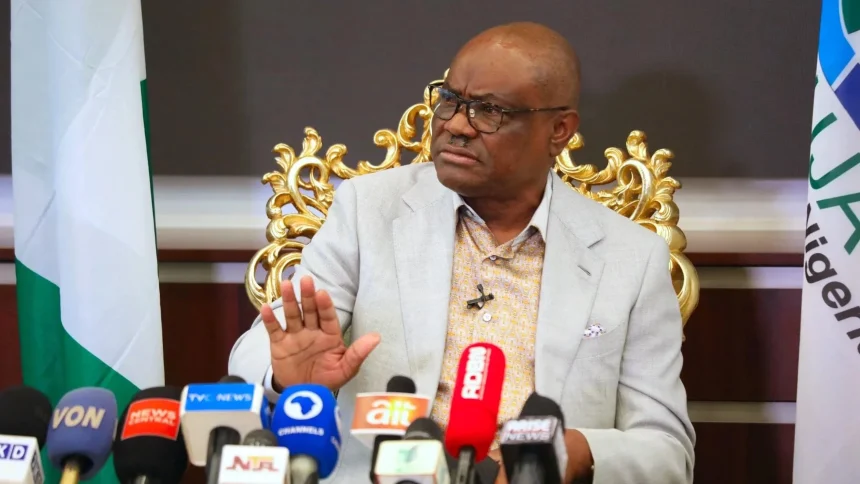
The Federal Capital Territory Administration has completed a vast portfolio of public infrastructure works, with approximately 70 percent of those finished developments originating from legacy contracts that had been abandoned for 15 to 16 years. This massive structural revival aligns directly with executive mandates issued by President Bola Tinubu, which stipulate that all viable, publicly funded government projects must be completed to prevent asset waste. Speaking during a comprehensive monthly media interaction in Abuja, FCT Minister Nyesom Wike explained that the current administration purposefully prioritized completing these historical works before deploying resources into entirely fresh capital construction.
According to data released during the briefing, roughly 60 percent of all physical engineering assets delivered over the last three years were originally awarded over a decade ago but left completely dormant by previous regimes. The administration opted for a dual development model, concurrently managing legacy property handovers while initiating modern road expansions across outlying satellite communities. This aggressive urban construction approach aims to systematically decongest central traffic corridors, improve cross-regional connectivity, and open up newly plotted districts for private residential real estate and commercial investment.
The accelerated pace of this regional transformation was heavily attributed to structural fiscal adjustments approved by the Presidency, specifically the extraction of the capital territory’s budget from the centralized Treasury Single Account framework. This financial autonomy ensures that contractors receive payments reliably without prolonged administrative delays, drastically raising investor confidence in the territory’s expanding infrastructure pipeline. Alongside these structural successes, the administration has introduced strict fiscal discipline, which includes reversing the local budget balance to heavily favor capital investments while actively blocking systemic avenues previously used for the diversion of public funds.