


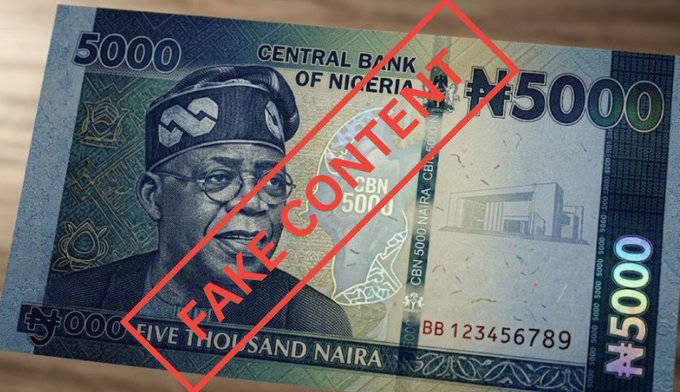
The Central Bank of Nigeria (CBN) has dismissed viral claims circulating on social media alleging the introduction of a new N5,000 banknote.
The apex bank confirmed that the image being shared online is fake and does not represent any official currency design or policy decision.
The clarification comes amid rising concerns over misinformation linked to Nigeria’s financial system and currency management.
Viral Image Sparks Nationwide Reactions
The false claim began spreading across multiple social media platforms, where users shared an image allegedly showing a newly designed N5,000 note.
The image further suggested that the note featured President Bola Tinubu, triggering widespread debate and confusion among users.
Many Nigerians reacted with skepticism, questioning whether the CBN had quietly introduced a higher denomination to address cash scarcity and inflation pressures.
The claims quickly gained traction before being flagged by the apex bank.
CBN Issues Official Rebuttal
In a statement posted on its official X (formerly Twitter) account, the CBN categorically denied the authenticity of the viral image.
The bank stated: “This content is fake. Let the public be guided.”
With that brief but firm response, the institution reaffirmed that no new currency note has been issued or approved.
The clarification aligns with the regulatory mandate of the CBN as the sole authority responsible for issuing legal tender in Nigeria.
Growing Challenge of Financial Misinformation
The incident highlights a broader challenge facing the Nigerian financial ecosystem, where digital misinformation spreads rapidly across social platforms.
False claims about currency redesigns, redenominations, or new denominations often generate public anxiety, particularly in an economy sensitive to cash availability and inflation trends.
In recent years, similar rumours have surfaced, including claims about proposed N5,000 and N10,000 banknotes. These were also previously debunked by the CBN.
Such misinformation often circulates without verification, leading to unnecessary panic and speculation among citizens and market participants.
CBN’s History of Currency Rumour Control
The current clarification is not the first time the CBN has had to address fake currency-related claims.
In previous instances, the bank has consistently warned the public against believing unofficial reports regarding changes to Nigeria’s legal tender.
The institution maintains that any policy decision involving currency redesign, introduction, or redenomination is formally communicated through verified channels.
These include official press releases, regulated media outlets, and announcements from the bank’s communication platforms.
Why Fake Currency Claims Gain Traction
Financial experts argue that false currency reports often spread quickly due to economic uncertainty and low public trust in unofficial online content.
In Nigeria’s case, persistent inflationary pressure and cash management reforms have made citizens more sensitive to perceived changes in currency policy.
Social media platforms further amplify such claims, allowing manipulated or AI-generated images to circulate widely before verification occurs.
This creates an environment where misinformation can influence public perception even without official confirmation.
Regulatory Reassurance to the Public
By debunking the viral claim, the CBN aims to reinforce confidence in Nigeria’s financial system and maintain stability in public expectations.
The bank has repeatedly assured citizens that the country’s currency framework remains unchanged and fully regulated.
It also continues to emphasize the importance of verifying financial information through official sources before sharing or acting on it.
