


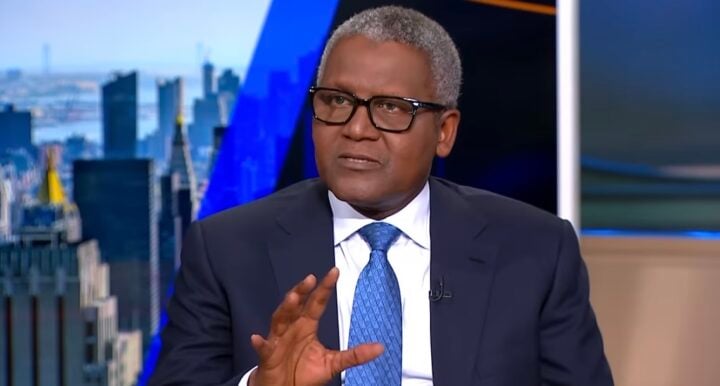
Africa’s richest man, Aliko Dangote, has disclosed that the Federal Government earns 52 kobo from every N1 generated through the operations of Dangote Cement.
Dangote made this known while speaking at the 2025 Taraba International Investment Summit held on May 21, where he emphasized the significant role taxation plays in government revenue.
According to him, the contribution of private sector investments to public finances is often underestimated, despite being a major driver of economic sustainability.
“I’m sure it might shock you that the federal government of Nigeria makes more money from our cement business than even we do in some cases. For every N1 we generate, 52 kobo goes to the federal government,” he said.
Taxation Remains Government’s Primary Revenue Source
Dangote used the opportunity to stress that governments do not necessarily need to own businesses to generate revenue. Instead, he argued that creating an enabling environment for private enterprises to thrive is more beneficial.
He noted that taxes collected from profitable businesses fund critical sectors such as healthcare, education, and infrastructure.
“We often say government has no business in business. But if that is the case, how do they fund development? It is through taxes,” he explained.
Drawing a comparison with global economies, Dangote pointed out that countries like the United States do not rely on direct ownership of oil assets to generate income.
“The American government doesn’t own oil blocks, yet they are among the largest producers globally. Their earnings come from taxation,” he added.
Investment Climate Key to Economic Growth
The Dangote Group founder also highlighted the importance of a stable and supportive investment climate in attracting both local and foreign investors.
He warned that foreign investors are unlikely to commit capital to any country where local businesses are struggling to survive.
According to him, strong domestic investment signals economic confidence and reduces perceived risks for international stakeholders.
“Foreign investors will not come if local investors are not thriving. It sends a wrong signal about the business environment,” Dangote said.
Commitment to Continued Investment in Nigeria
Despite economic challenges, Dangote reaffirmed his company’s commitment to expanding its investments in Nigeria. He said the group would continue to create jobs and support host communities through its operations.
Dangote Cement, one of Africa’s largest cement producers, plays a critical role in Nigeria’s construction and infrastructure sectors. The company’s scale of operations also makes it a major contributor to government revenue through taxes and levies.
Industry analysts say Dangote’s disclosure underscores the broader impact of large-scale manufacturing firms on Nigeria’s fiscal health.
Broader Economic Implications
The revelation comes at a time when Nigeria is seeking to boost non-oil revenue amid fluctuating global oil prices. Experts argue that strengthening the manufacturing sector could significantly improve government earnings through taxation.
Dangote’s comments also reignite conversations around the role of government in business and the need for policies that encourage private sector growth.
By prioritizing ease of doing business, regulatory stability, and infrastructure development, stakeholders believe Nigeria can unlock greater economic potential.
