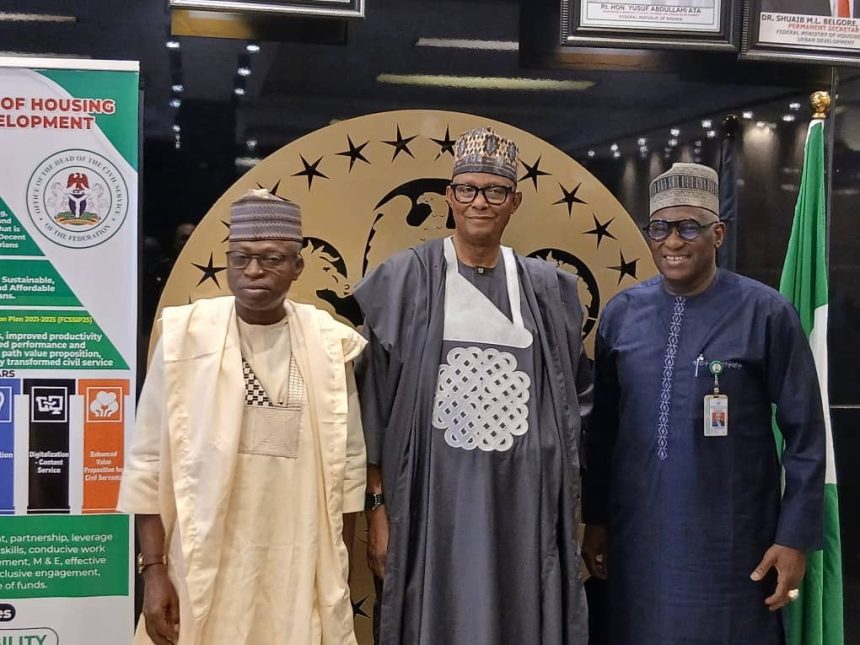
Nigeria’s newly appointed Minister of Housing and Urban Development, Muttaqha Darma, has pledged to tackle the country’s housing deficit through collaboration, strategic planning, and improved affordability.
Speaking during his official handover in Abuja, Darma said his administration would adopt a results-driven approach that prioritises partnerships across the housing value chain.
He stressed that solving Nigeria’s housing challenges requires cooperation beyond government, involving private sector players and other key stakeholders.
According to the minister, measurable performance indicators will guide his administration, adding that he is ready to be held accountable if targets are not met.
Housing Deficit Still a Major Challenge
Darma acknowledged the scale of Nigeria’s housing gap, noting that estimates range between 14 million and 20 million units.
He explained that bridging this deficit will require clear direction, proper planning, and sustained engagement with industry players.
The minister emphasised that without a structured and strategic approach, meaningful progress would remain difficult.
Affordability Concerns Take Centre Stage
Beyond supply, Darma highlighted the growing affordability crisis in Nigeria’s housing sector.
He pointed out that the cost of housing, especially in cities like Abuja, has priced out middle-income earners.
“One-bedroom apartments selling for ₦25 million to ₦30 million are clearly beyond the reach of many Nigerians,” he noted.
He assured that his administration would work towards making housing accessible across different income levels nationwide.
Funding and Implementation Hurdles
Also speaking at the event, Minister of State for Housing, Yusuf Ata, said ongoing housing projects have created over 300,000 jobs across Nigeria.
However, he identified funding delays and inadequate budget releases as major constraints affecting project delivery.
Despite these challenges, Ata expressed confidence that the ministry is positioned to build on existing reforms and expand affordable housing initiatives.
Focus on Partnerships and Economic Impact
The ministry reaffirmed its commitment to Public-Private Partnerships (PPPs) as a key strategy for scaling housing delivery.
Officials noted that collaboration with investors and developers remains essential to increasing supply, improving infrastructure, and driving economic growth.
Darma reiterated that his leadership would focus on delivering practical results, ensuring that housing policies translate into real homes for Nigerians.