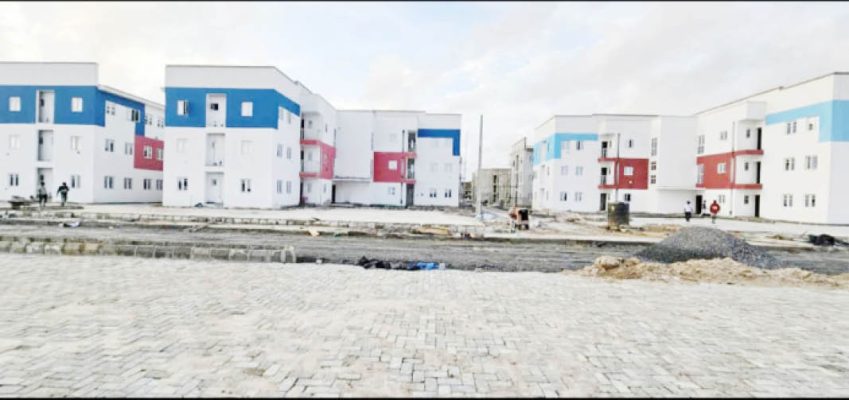
Many years after independence, Nigerian civil servants continue to grapple with rising rents, stagnant wages and the growing difficulty of home ownership. For millions of workers, owning a house remains a distant dream as housing costs continue to rise faster than incomes.
Nigeria’s housing challenge has remained one of the country’s most persistent development issues. Despite several interventions and policy promises over the years, the gap between housing demand and available supply continues to widen.
Rapid urbanisation, population growth, inflation, and high construction costs have combined to worsen the crisis, leaving many Nigerians trapped in expensive rental markets.
Housing Deficit Continues to Grow
While estimates vary, stakeholders generally agree that Nigeria’s housing deficit exceeds 15 million units.
This shortfall has forced millions of families into overcrowded apartments, substandard housing and informal settlements.
Unlike many developed countries where mortgage systems support large-scale home ownership, Nigeria’s housing finance sector remains weak due to high interest rates, low incomes and inadequate long-term financing structures.
For years, the Federal Mortgage Bank of Nigeria (FMBN) has remained one of the few institutions providing affordable long-term housing loans at single-digit interest rates.
However, experts say inadequate capitalisation has limited the institution’s reach.
Rising Rent Pressure on Workers
Across major cities such as Abuja, Lagos, Port Harcourt and Kano, rent prices have surged significantly.
Inflation, foreign exchange instability, high energy costs and increased prices of building materials have pushed up development costs, with landlords transferring those expenses directly to tenants.
For civil servants whose salaries often remain fixed for long periods, the impact has been severe.
Many workers now spend substantial portions of their income on rent and transportation after relocating to distant suburbs in search of cheaper accommodation.
In many cases, salary earners devote more than half of their monthly income to housing-related expenses.
FG Introduces N10bn Mortgage Intervention
The Federal Government recently announced a N10 billion housing facility through a partnership involving FMBN and the Federal Government Staff Housing Loans Board (FGSHLB).
The initiative aims to improve housing affordability and expand access to mortgage opportunities for federal workers.
The collaboration gained momentum following strategic engagements between leadership of both organisations focused on developing practical housing solutions tailored specifically to civil servants.
Under the arrangement, FMBN will provide funding support to FGSHLB for onward lending to workers.
The agreement is expected to strengthen access to homeownership financing, home renovation support, rent assistance and incremental housing development.
FMBN Expands Affordable Housing Products
Over the years, FMBN has expanded beyond traditional mortgage offerings.
The bank now provides products including:
- NHF Mortgage Loans
- Home Renovation Loans
- Rent-to-Own schemes
- Individual Construction Loans
- Cooperative Housing Development Loans
- Home Improvement Loans
- Rent Assistance programmes
- Diaspora Mortgage products
Among workers, the Home Renovation Loan has become particularly attractive because it offers affordable financing for repairs and completion of existing projects.
What the Initiative Means for Civil Servants
Analysts believe the significance of the N10 billion housing facility extends beyond its financial value.
The intervention arrives at a period when rising living costs and expensive rental obligations are placing enormous pressure on workers.
For many civil servants who dedicate decades to public service without realistic prospects of owning a home, the initiative offers renewed hope.
Importantly, FMBN Managing Director Shehu Usman Osidi disclosed that the bank had previously disbursed over N2.6 billion in Home Renovation Loans to more than 3,000 federal civil servants through FGSHLB.
This existing implementation record is seen as a sign that the partnership has practical foundations beyond policy announcements.
Industry observers say affordable housing can no longer be treated solely as a social intervention. It is increasingly becoming an economic necessity tied directly to worker welfare, productivity and long-term financial security.