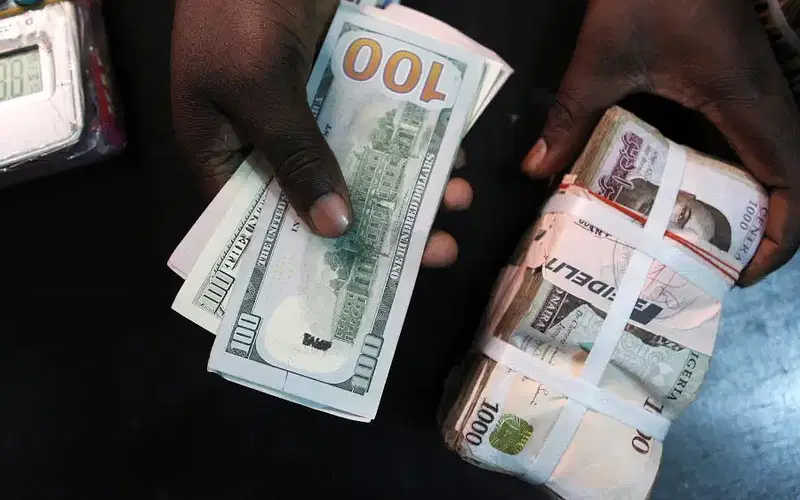
The Nigerian naira maintained relative stability at the official market but weakened in the parallel segment on Friday, highlighting ongoing pressure in the foreign exchange market.
At the Nigerian Foreign Exchange Market (NFEM), the naira opened trading at an official rate of N1,340.88 to the dollar, reflecting a more stable trend compared to earlier volatility recorded in the month.
Analysts attribute the relative calm in the official window to recent interventions by the Central Bank of Nigeria, including liquidity injections aimed at easing dollar demand and stabilising the market.
However, the situation in the parallel market painted a different picture, as traders in major cities like Lagos and Abuja quoted the dollar at around N1,250, indicating sustained demand for foreign exchange outside the official window.
The disparity between the official and parallel market rates, though narrower than in previous months, continues to reflect structural challenges within Nigeria’s foreign exchange system.
Market watchers say the gradual convergence of rates is a result of ongoing monetary reforms and improved transparency in price discovery at the NFEM.
Financial experts also link the naira’s recent stability to improved crude oil production and increased foreign exchange inflows, which have helped ease pressure on the local currency.
Despite this, concerns remain over external factors, including global inflation trends and interest rate movements in the United States, which could influence currency flows and impact the naira’s performance in the coming weeks.
For businesses and individuals, the parallel market remains a critical source of foreign exchange, particularly for those seeking immediate access to dollars.
Bureau De Change operators note that while liquidity conditions have improved slightly, demand for the dollar remains strong as economic activities pick up in the second quarter of the year.
Economic analysts warn that sustained stability in the foreign exchange market will depend on consistent policy implementation, improved dollar supply, and broader macroeconomic reforms.
The latest exchange rate movement underscores the delicate balance the Nigerian economy must maintain as it navigates both domestic pressures and global financial dynamics.