


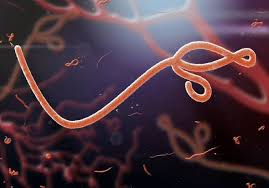
The Nigeria Centre for Disease Control and Prevention (NCDC) has placed Lagos, the Federal Capital Territory (FCT), and several other states on high Ebola alert following the outbreak of the deadly Bundibugyo strain of the Ebola Virus Disease in parts of East and Central Africa.
In a national public health advisory issued to Commissioners for Health across Nigeria, the NCDC warned that the country faces a high risk of importing the virus due to increasing regional transmission, international travel, porous borders, and population movement.
States identified as high-risk include Lagos, the FCT, Rivers, Kano, Enugu, Borno, Akwa Ibom, Cross River, Taraba, and Adamawa because of their international airports, seaports, border routes, and heavy human traffic.
The advisory, dated May 27, 2026, followed growing concerns over the spread of the Bundibugyo variant of Ebola, a rare strain for which there is currently no approved vaccine or specific treatment.
“The immediate objective of our national preparedness and readiness efforts is to ensure that every State and the FCT can reasonably detect, contain, and respond swiftly to any suspected case while protecting health workers and sustaining essential health services,” the NCDC stated.
Although no confirmed Ebola case has been recorded in Nigeria, the agency said a dynamic risk assessment conducted after the outbreak was declared a Public Health Emergency of International Concern showed that the danger of importation into Nigeria remains high.
According to the NCDC, Uganda and the Democratic Republic of Congo have already recorded 1,077 suspected cases and 247 deaths, representing a fatality rate of 24.6 per cent.
The agency further disclosed that suspected cases had reportedly been identified in India, while Canada imposed temporary travel restrictions involving residents of Uganda, the DRC, and South Sudan. Uganda has also reportedly introduced border closure measures to contain the outbreak.
The NCDC stressed that the Bundibugyo strain differs significantly from the Zaire Ebola strain, which currently has approved vaccines and targeted treatments.
“The current Bundibugyo virus outbreak has no licensed vaccines or approved targeted therapeutics,” the agency warned.
Health officials also cautioned that Ebola symptoms may initially resemble malaria, Lassa fever, or other common illnesses, making early detection difficult.
“Health workers must not wait for bleeding before suspecting Ebola in any patient with compatible symptoms and relevant travel or exposure history,” the advisory stated.
The NCDC clarified that Ebola is not airborne and spreads mainly through direct contact with infected blood, body fluids, contaminated materials, or infected animals.
As part of emergency preparedness efforts, the agency said its National Emergency Operations Centre had already been activated in alert mode to coordinate response activities nationwide.
State governments were directed to activate Ebola preparedness structures immediately, identify isolation centres, intensify surveillance at airports and border points, provide personal protective equipment for health workers, and launch public awareness campaigns to counter misinformation and panic.
The agency also instructed states to submit preparedness and readiness reports within 72 hours.
Nigeria’s latest Ebola alert has revived memories of the country’s successful containment of the virus during the 2014 outbreak, when infected Liberian-American traveller Patrick Sawyer arrived in Lagos and exposed dozens of people before authorities intervened.
At the time, health experts feared a major outbreak due to Lagos’ dense population and status as a major commercial hub. However, aggressive contact tracing, isolation measures, and public awareness campaigns helped Nigeria contain the virus within months.
The World Health Organisation later described Nigeria’s response as one of Africa’s most effective Ebola containment efforts.
Public health experts have warned that Nigeria’s busy airports, porous borders, crowded urban centres, and overstretched healthcare system increase the country’s vulnerability during regional disease outbreaks.
The warning also comes as Nigeria continues to battle outbreaks of Lassa fever, cholera, and meningitis in several states, placing additional pressure on the healthcare sector.
Health authorities have urged Nigerians to remain calm, avoid fake cures and rumours, maintain proper hygiene, and report suspected symptoms promptly as surveillance and preparedness efforts intensify nationwide.