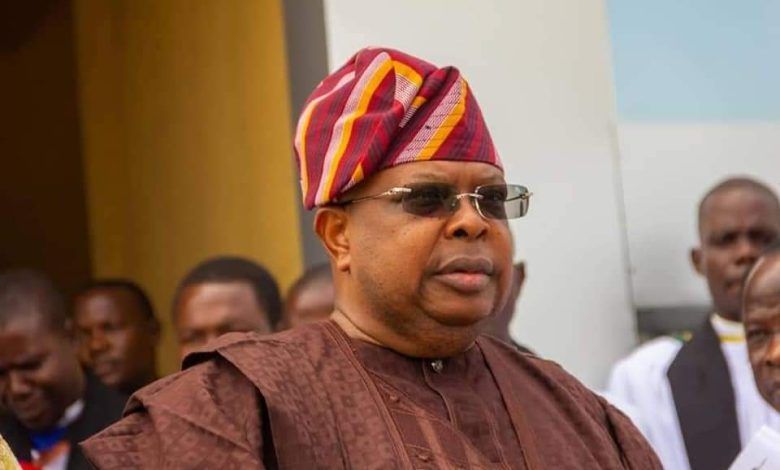
Nigeria’s new Minister of Power, Olasunkanmi Tegbe, has assured Nigerians that repeated national grid collapses, unstable electricity supply, and vandalism of power infrastructure will soon be addressed through urgent reforms.
Tegbe gave the assurance on Wednesday during his screening before the Senate plenary in Abuja, where lawmakers later confirmed his appointment after extensive questioning on the state of the country’s electricity sector.
The screening session, presided over by Senate President Godswill Akpabio, focused heavily on the recurring collapse of the national grid, weak transmission infrastructure, and the growing liquidity crisis in the power sector.
Lawmakers warned that Nigerians were tired of repeated promises and demanded measurable improvements within a short period.
Senator Tahir Monguno described the persistent collapse of the national grid as a major setback to Nigeria’s economic and industrial growth.
“Grid collapse has become a recurring decimal, undermining development. Transmission has failed to match generation capacity,” he said.
Responding, Tegbe admitted that the sector’s challenges were deeply rooted and linked to poor coordination, inadequate gas supply, and weak enforcement of technical standards.
“Grid collapse is not accidental; it reflects deeper structural problems,” he stated.
The minister-designate announced a 100-day reform plan aimed at stabilising the grid and improving public accountability through a performance monitoring system.
“If there are no results in three months, there will be none in six. Nigerians should hold us accountable,” he declared.
Tegbe also accused certain individuals of benefiting from the inefficiencies in the electricity sector and vowed to confront sabotage directly.
“There are elements that do not want the system to work because they benefit from its failure. We will take them on,” he said.
On the issue of vandalism, he described attacks on power infrastructure as a national security threat and promised closer collaboration with security agencies, including the military and the Office of the National Security Adviser.
The minister-designate further acknowledged the worsening liquidity crisis in the sector, estimated at about N6tn, and described the current financial structure as unsustainable.
He pledged reforms that would support market-reflective electricity tariffs while ensuring affordability for vulnerable Nigerians.
“Electricity pricing must reflect market realities, but affordability remains essential. We will ensure a fair balance,” he said.
Lawmakers also pressed Tegbe on rural electrification and metering challenges affecting millions of consumers nationwide.
In response, he promised to expand mini-grid and renewable energy projects, especially solar-powered systems, to underserved communities.
“Decentralised energy will be key to reaching underserved communities and ensuring inclusive access,” he added.
Deputy Senate President Barau Jibrin described the power sector as one of Nigeria’s biggest economic challenges, stressing that industries cannot survive without reliable electricity supply.
Despite the intense scrutiny, senators expressed cautious optimism in Tegbe’s ability to deliver reforms, citing his professional background and reform proposals.
In his closing remarks, Tegbe assured Nigerians that transparency, discipline, and collaboration would drive improvements in the sector.
“This is a difficult assignment, but progress is achievable with transparency, discipline and collaboration. Nigerians will see change,” he said.
President Bola Tinubu had forwarded Tegbe’s nomination to the Senate following the resignation of former Power Minister Adebayo Adelabu, who stepped down to pursue the Oyo State governorship ambition.