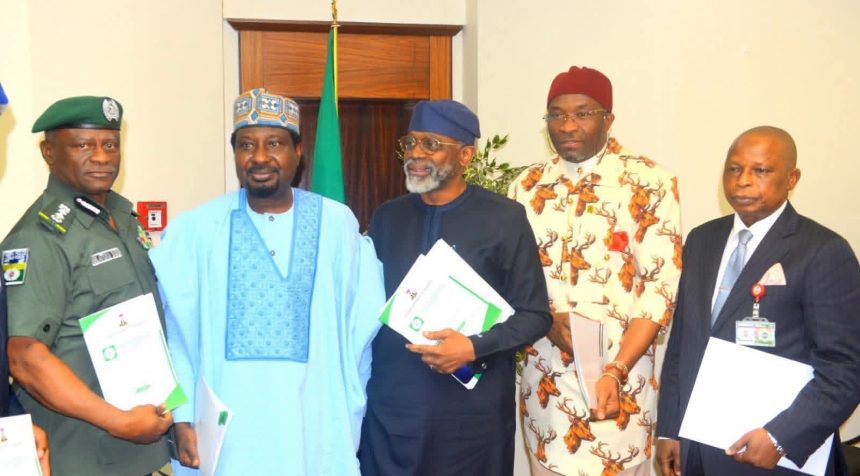
The Presidency has disclosed that Nigeria is moving closer to establishing state police, with a constitutional amendment required for the new policing structure expected to be introduced soon.
Chief of Staff to the President, Femi Gbajabiamila, made the disclosure after a high-level consultative meeting on state police held at the State House in Abuja.
According to Gbajabiamila, discussions on the proposed state policing framework began several months ago on the directive of President Bola Ahmed Tinubu and have made significant progress.
He explained that establishing state police involves complex constitutional and legal processes that require extensive consultations among stakeholders, including the Executive, the National Assembly, and security agencies.
“We started deliberations in the last three or four months on how to go about the establishment of state police as directed by Mr President. Establishing state police is not something that you do with the snap of the fingers. There is a lot involved in terms of constitution and legalities, and thank God we have now gained a lot of traction,” he said.
Constitutional Amendment Under Consideration
Gbajabiamila stated that attention is now focused on drafting the constitutional amendment that will provide the legal basis for state police, while enabling legislation will follow afterward.
“Right now, what we are looking at is the constitutional amendment itself, and then the enabling law would follow thereafter,” he added.
The Chief of Staff noted that there is growing national consensus on the need for state police, stressing that the debate has shifted from whether Nigeria should adopt the system to how it should be implemented effectively.
Tinubu to Receive Report
Gbajabiamila said President Tinubu would be presented with a detailed report of the consultations and recommendations arising from the meeting.
The proposed reform is expected to strengthen Nigeria’s security architecture by improving grassroots intelligence gathering, enhancing rapid response capabilities, and empowering state governments to address local security challenges more effectively.
President Tinubu has consistently advocated for decentralised policing, arguing that state police would provide a more effective response to the country’s evolving security threats while improving protection of lives and property.
Key Stakeholders Attend Meeting
Among those present at the meeting were Deputy President of the Senate Barau Jibrin, Deputy Speaker of the House of Representatives Benjamin Kalu, and Inspector-General of Police Kayode Egbetokun, alongside other senior government and security officials.
If approved, the state police initiative would represent one of the most significant security reforms in Nigeria’s democratic history, potentially reshaping law enforcement and internal security management across the country.