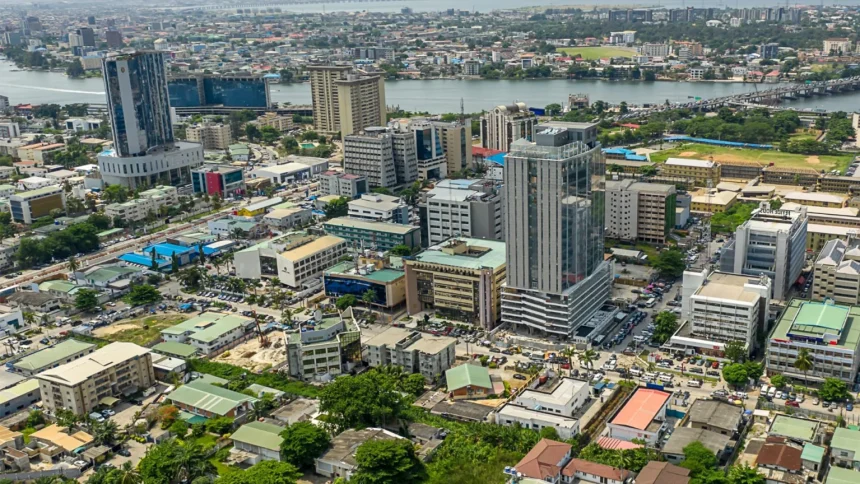
Despite posting strong turnover in 2025, Nigeria’s real estate and construction sectors recorded limited real expansion, highlighting a widening gap between nominal growth and actual productivity.
Stakeholders, however, remain optimistic, pointing to rising infrastructure demand, rapid urbanisation, and steady private sector investment as key drivers of future growth.
Construction and Real Estate Hit Strong Nominal Growth
Nigeria’s construction and real estate sectors recorded significant nominal growth in 2025, according to data from the National Bureau of Statistics (NBS).
- Construction sector: N19.36 trillion, up from N16.29 trillion in 2024 (18.8% increase)
- Real estate sector: N58.16 trillion, up from N41.27 trillion in 2024 (40.93% increase)
Combined, the two sectors contributed N77.52 trillion in nominal output for 2025.
However, analysts warn that this growth is heavily influenced by inflation and rising project costs rather than a proportional increase in real economic output.
Real Growth Tells a Different Story
While nominal figures rose sharply, real GDP performance shows a more moderate picture.
- Construction real GDP growth: 5.53% in 2025, up from 4.16% in 2024
- Real estate real GDP growth: 3.78% in 2025, down from 6.59% in 2024
This divergence suggests that while more money is flowing into the sectors, actual output—such as completed housing units and infrastructure delivery—is not increasing at the same pace.
Quarterly data further reflects uneven performance:
- Construction peaked in Q4 2025 at N5.52tn
- Real estate peaked in Q3 2025 at N18.24tn
Inflation and Cost Pressures Driving Nominal Growth
Stakeholders say rising costs are inflating sector figures without delivering equivalent physical expansion.
Soji Adeniji, Chairman of the Lagos Chamber of Commerce and Industry (LCCI) Construction and Engineering Group, said growth is being driven by infrastructure demand and urban expansion.
He noted that inflation and foreign exchange pressures are significantly increasing project costs.
“In simple terms, projects are costing more, and that is reflecting in the sector’s GDP contribution,” he said.
Housing Demand and Population Growth Fuel Real Estate
In the real estate sector, Dr Michael Oladiji, Chairman of the LCCI Real Estate Group, linked turnover growth to Nigeria’s rising population and housing demand.
“Housing is a basic need. As the population increases, demand for housing rises,” he said.
He also highlighted the role of diaspora remittances in financing property development across the country.
However, he acknowledged that rising costs and inefficiencies are limiting the sector’s ability to translate investment into actual housing delivery.
Private Investment and Urbanisation Remain Key Drivers
Urban expansion in major cities such as Lagos continues to fuel demand for both residential and commercial developments.
Adeniji noted that private investors increasingly view real estate as a hedge against inflation, while informal housing development also contributes to sector activity.
He added that despite economic challenges, operators have remained resilient in delivering projects across the country.
Financing Constraints and Structural Challenges
Stakeholders warn that limited access to affordable financing remains a major barrier to sustained growth.
Adeniji stressed that cost stability and long-term funding are essential for infrastructure and housing delivery.
Without these, the sector risks continued reliance on nominal expansion rather than real output growth.
Technology and ESG Becoming Critical
Industry experts say the future of the sector will depend on improved efficiency and technology adoption.
Oladiji highlighted the growing use of smart buildings, digital property platforms, and virtual tools to improve sales and construction efficiency.
Environmental, social, and governance (ESG) standards are also becoming more important in attracting funding.
Adeniji said ESG compliance is now “a core requirement for sustainable growth in the construction sector.”
Outlook: From Volume to Value
Despite strong figures, stakeholders agree that Nigeria’s construction and real estate sectors must shift from volume-based growth to value-driven delivery.
Adeniji concluded that future success will depend not just on how much is built, but how efficiently and sustainably it is delivered.
As Nigeria continues to face a major housing deficit, the challenge remains turning rising investment into tangible, affordable housing and infrastructure for a growing population.