Nigeria’s retail sector is undergoing a quiet but significant structural shift as rising economic pressures, changing consumer behaviour, and increasing operational costs force investors and developers to reassess the future of shopping malls across the country.
In major cities such as Lagos and Abuja, several retail assets and shopping plazas are now being quietly offered for sale. While this has raised concerns about the stability of Nigeria’s once-booming mall culture, industry stakeholders say the trend reflects restructuring rather than a collapse.
Rising Costs and Weak Consumer Spending Pressure Retail Market
For over a decade, modern shopping malls symbolised Nigeria’s expanding urban middle class, with major developments concentrated in Lekki, Victoria Island, Ikeja, Ajah, and Abuja.
However, the economic environment has changed sharply. Inflation, currency depreciation, and rising living costs have reduced disposable income, forcing households to prioritise essentials such as food, transport, school fees, and utilities over lifestyle and discretionary spending.
This shift has significantly reduced foot traffic and sales in many retail centres.
Retailers and Mall Operators Under Financial Strain
Industry analysts say retailers are struggling to maintain profitability amid declining consumer purchasing power. Many brands are scaling back operations, renegotiating rent agreements, or closing underperforming outlets.
The situation is more severe for malls reliant on imported goods and high-end tenants. At the same time, operational costs have surged, particularly due to Nigeria’s unstable electricity supply, which forces malls to depend heavily on diesel generators.
As energy costs rise, facility management expenses have become increasingly difficult to sustain, putting pressure on both landlords and tenants.
Anchor Tenant Risks and Vacancy Pressures
A growing concern in the sector is the overreliance on anchor tenants such as supermarkets to drive mall traffic.
The uncertainty surrounding major retail chains like Shoprite in previous years exposed this vulnerability, as fears of store closures often led to reduced investor confidence and tenant instability.
When anchor tenants exit, smaller retailers typically experience reduced traffic, leading to higher vacancy rates and lower rental income for mall owners.
Oversupply and Changing Retail Dynamics
Experts also point to oversupply in some retail corridors, particularly in Lagos, where rapid mall development has outpaced consumer demand growth.
As a result, secondary malls are now struggling with low occupancy levels, while investors are shifting focus toward prime locations with stronger demographics and higher spending power.
Despite these challenges, analysts insist the retail sector is not disappearing but evolving.
Shift Toward Neighbourhood and Mixed-Use Retail
Consumer behaviour is changing rapidly, with increasing demand for convenience retail formats such as neighbourhood shopping centres, mini marts, and mixed-use developments closer to residential areas.
Digital commerce, social media-driven sales, and WhatsApp-based businesses are also reducing dependence on traditional malls for everyday shopping.
At the premium end of the market, developers are repositioning malls into lifestyle and entertainment hubs, integrating cinemas, restaurants, co-working spaces, and hospitality facilities to attract experience-driven consumers.
Asset Sales Reflect Market Repositioning, Not Collapse
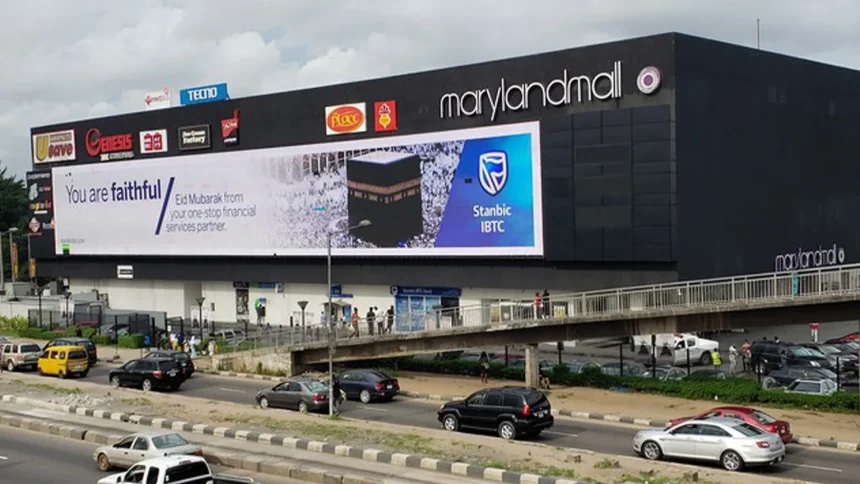
Recent activity, including the offering of the Maryland Mall asset for sale, highlights financial pressures within parts of the sector.
The development has been linked to liquidity challenges and debt restructuring efforts involving stakeholders in the property.
Industry experts say such transactions reflect broader repositioning trends rather than a total market exit.
Foreign Exchange Pressure and Investor Confidence
Estate surveyor and valuer Rogba Orimalade noted that foreign exchange volatility remains one of the biggest risks facing Nigeria’s retail real estate market.
He explained that difficulties in repatriating funds and naira depreciation have weakened investor confidence, especially among foreign developers who previously dominated Grade A mall developments.
He also highlighted challenges around poor tenant mix and unrealistic rental pricing strategies, which have contributed to vacancy issues and declining mall performance.
Local Investors Drive Market Continuity
Despite challenges, some experts believe the retail sector remains active, with local investors increasingly taking over assets previously dominated by foreign operators.
According to industry observers, retail activity is gradually shifting toward smaller, community-focused developments, while established malls are being repurposed or repositioned for new consumer trends.