The rising cost of public projects in Nigeria has come under renewed scrutiny as industry experts and policymakers call for institutional reforms to strengthen cost control mechanisms across government agencies.
The Nigerian Institute of Quantity Surveyors has urged the Federal Government to mandate the engagement of certified quantity surveyors in procurement and contract management processes to ensure transparency, accountability, and cost efficiency.
Speaking in Abuja, NIQS President Aminu Bashir emphasised that quantity surveyors are equipped with the technical expertise required to manage construction costs and prevent financial leakages in infrastructure delivery.
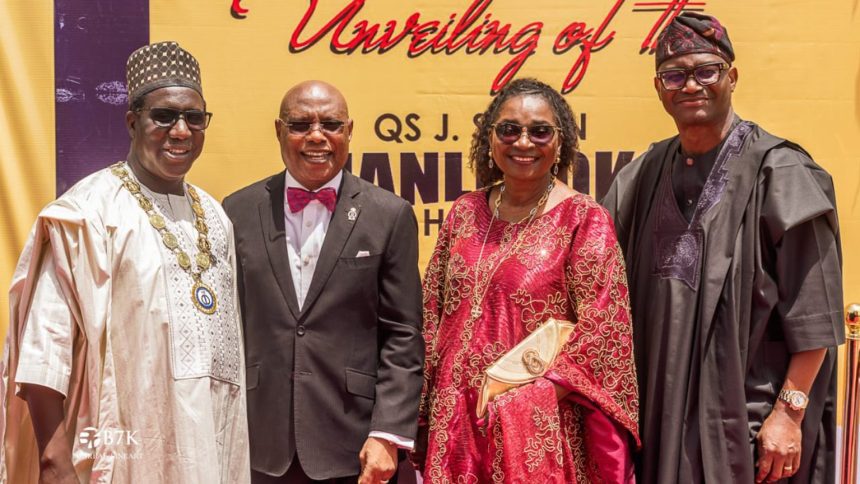
He made the call during the naming of the institute’s secretariat building in honour of former president Olusegun Ajanlekoko, describing him as a distinguished professional whose contributions have shaped cost management practices in Nigeria’s construction industry.
Former Cross River State governor Donald Duke reinforced the call for reform, advocating the establishment of dedicated cost control units within Ministries, Departments and Agencies (MDAs) to oversee project budgeting and execution.
Duke noted that effective cost management remains critical to reducing waste in public spending, citing the Tinapa Resort project where professional cost oversight reportedly saved about N3 billion during its development.
Also speaking at the event, Chairman of Family Homes Fund Limited Demola Adebise stressed that the role of quantity surveyors has become increasingly vital in ensuring value delivery, particularly in large-scale housing and infrastructure projects.
He observed that sustainable project delivery at scale cannot be achieved without strong built environment professionals, describing quantity surveyors as central to maintaining financial discipline in construction processes.
In his remarks, Ajanlekoko called for the consistent deployment of registered professionals in both public and private sector projects, stressing that adherence to professional standards is essential to achieving value for money.
He urged practitioners to uphold integrity, discipline, and excellence, noting that leadership in the profession must be anchored on service, character, and long-term value creation rather than personal recognition.
Ajanlekoko described the naming of the Abuja secretariat building in his honour as a humbling experience, highlighting the importance of legacy and sustained professional impact in the built environment sector.
Stakeholders at the event expressed concern that weak institutional frameworks and the absence of structured cost control systems in many MDAs have contributed significantly to inflated project costs nationwide.
They warned that without deliberate reforms, Nigeria may continue to experience inefficiencies in public project delivery, undermining infrastructure development and economic growth.
The call for reform comes amid increasing pressure on government finances, with experts stressing that improved cost management practices could help optimise limited resources and enhance project outcomes.
Analysts believe that integrating quantity surveyors into the core decision-making processes of MDAs would not only curb excessive spending but also restore confidence in public procurement systems.
They further noted that strengthening professional oversight in construction projects is essential to addressing long-standing challenges in Nigeria’s infrastructure sector and ensuring sustainable development.