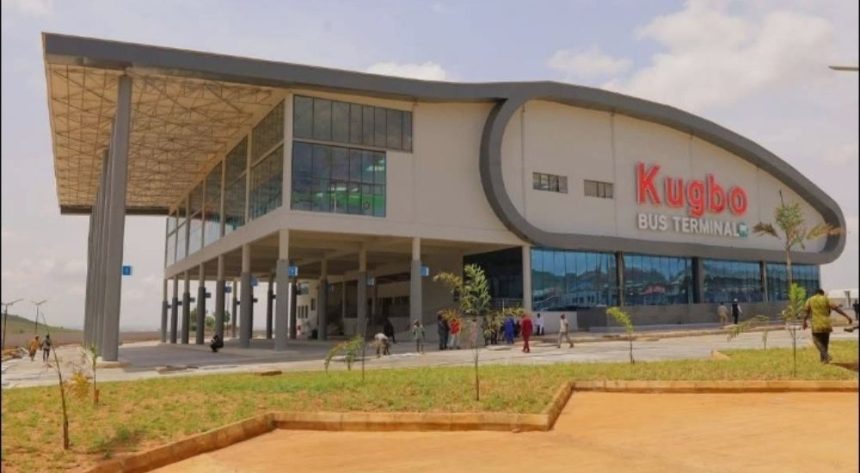
A heavy rainstorm on Tuesday has damaged sections of the Kugbo Bus Terminal in Abuja, causing debris to spill onto the busy Nyanya–Keffi Expressway and triggering severe traffic congestion along the corridor.
The incident, which occurred less than a year after the terminal’s commissioning, disrupted vehicular movement as motorists struggled to navigate blocked lanes while residents attempted to clear debris to restore traffic flow.
Eyewitnesses said the situation quickly escalated into gridlock, particularly around the Abuja Computerised Vehicle Inspection Centre, where congestion intensified due to the obstruction caused by fallen materials.
The Federal Capital Territory Administration confirmed that the windstorm affected parts of the Kugbo Bus Terminal and caused minor damage to nearby infrastructure, including the Nyanya pedestrian bridge.
In a statement signed by Lere Olayinka, authorities disclosed that no casualties were recorded and no vehicles were damaged despite the scale of the disruption.
Following the incident, the Minister of the Federal Capital Territory, Nyesom Wike, ordered the immediate deployment of security personnel to maintain order and manage traffic in the affected area.
Officials also assured that urgent repairs would be carried out on the damaged sections of the terminal and surrounding infrastructure to prevent further disruptions.
The development has raised concerns over the durability of recently completed public infrastructure, particularly as the Kugbo Bus Terminal was inaugurated on June 26, 2025, as part of efforts to modernise Abuja’s transport system.
The project formed part of a broader N51 billion contract for the construction of three bus terminals aimed at improving urban mobility and easing transportation challenges within the Federal Capital Territory.
Constructed by Planet Projects Limited, the terminal was delivered within one year after its flag-off in June 2024, marking a significant milestone in the government’s infrastructure development drive.
However, Tuesday’s incident has sparked fresh scrutiny over construction standards, climate resilience, and maintenance frameworks for public projects, especially in the face of increasingly unpredictable weather patterns.
Analysts say the damage underscores the need for stricter quality control measures and improved infrastructure planning to withstand environmental stress and protect public investments.