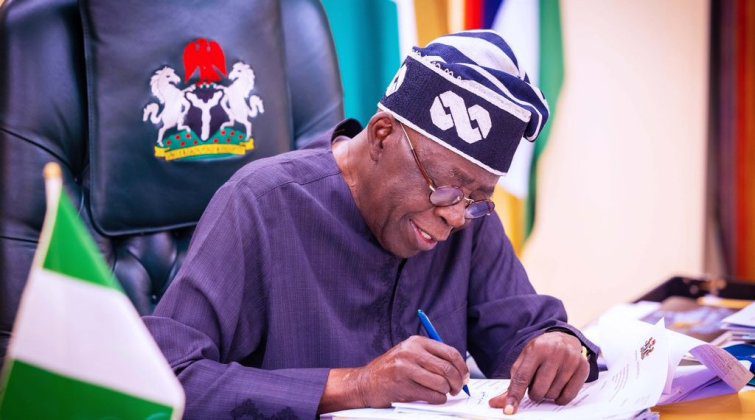
President Bola Ahmed Tinubu has signed the ₦68.32 trillion 2026 Appropriation Bill into law, setting Nigeria’s fiscal direction for the year while extending the lifespan of the 2025 capital budget.
The newly approved budget, which took effect from April 1, prioritises economic stability, infrastructure development, national security, and inclusive growth.
According to details released by the State House, ₦4.799 trillion has been allocated for statutory transfers, while ₦15.8 trillion will go toward debt servicing. Recurrent expenditure stands at ₦15.4 trillion.
A significant ₦32.2 trillion—nearly half of the total budget—has been earmarked for capital expenditure through the Development Fund, signalling the government’s push to accelerate infrastructure projects and stimulate productivity across key sectors.
In addition, the President approved an amendment extending the implementation period of the 2025 budget’s capital component from March 31 to June 30, 2026.
The extension is expected to give Ministries, Departments, and Agencies (MDAs) more time to complete ongoing projects that are already at advanced stages, ensuring better utilisation of public funds and improved project delivery.
Officials said the move would enhance completion rates and maximise value for money, particularly in critical infrastructure and development projects nationwide.
With the 2026 budget now in force, the Federal Government is set to commence full implementation in line with its Renewed Hope Agenda.
Tinubu has directed all MDAs to adhere strictly to fiscal discipline, transparency, and efficiency in the use of allocated resources, with emphasis on timely execution and accountability.
He also commended the National Assembly for its cooperation in the swift passage of the budget, highlighting the importance of synergy between the executive and legislative arms in driving national development.
The President further assured Nigerians of his administration’s commitment to strengthening fiscal reforms, boosting revenue generation, and prioritising investments that will drive economic growth, create jobs, and enhance social protection.
The development marks a key milestone in Nigeria’s fiscal planning cycle as the government seeks to balance rising expenditure demands with long-term economic stability.