The World Health Organisation (WHO) has approved an additional $3.4 million in emergency funding to support efforts to contain the escalating Ebola outbreak in the Democratic Republic of Congo (DRC) and Uganda, bringing its total allocation to $3.9 million.
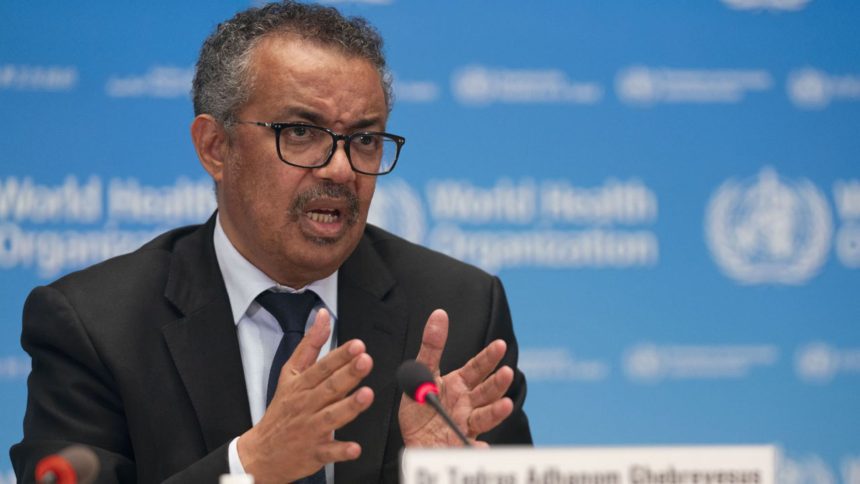
The WHO Director-General, Dr. Tedros Adhanom Ghebreyesus, disclosed this during a media briefing in Geneva on Wednesday, where he also confirmed that the outbreak has been classified as a Public Health Emergency of International Concern (PHEIC).
He said the declaration was made after consultations with authorities in both countries under the International Health Regulations, stressing the need for urgent global coordination to prevent wider regional and international spread.
According to WHO data, the outbreak has recorded 51 confirmed infections in the DRC, mainly in Ituri and North Kivu provinces, including Bunia and Goma. Uganda has also reported two confirmed cases in Kampala, one of which resulted in death.
The organisation also noted that suspected cases and fatalities are significantly higher, with about 600 suspected infections and at least 139 suspected deaths currently under investigation.
Dr. Tedros warned that the actual scale of the outbreak may be larger than reported, citing ongoing transmission in urban areas and infections among healthcare workers as indicators of active spread within health facilities.
He further raised concern that insecurity, displacement, and mining-related population movement in eastern DRC are worsening the situation and increasing the risk of cross-border transmission.
According to him, renewed violence in Ituri Province since late 2025 has displaced more than 100,000 people, complicating containment and response efforts on the ground.
The WHO chief also noted that the outbreak involves the Bundibugyo strain of Ebola, which currently has no approved vaccine or specific treatment, making rapid containment critical.
He said the organisation acted swiftly to prevent further loss of lives and potential international spread, adding that delay in response could have severe consequences.
Tedros commended the governments of DRC and Uganda for their cooperation, including Uganda’s decision to suspend its annual Martyrs’ Day gathering due to public health concerns.
WHO confirmed that emergency teams, medical supplies, and technical personnel have already been deployed to affected regions to support surveillance, treatment, and containment operations.
The funding for the response is being drawn from WHO’s Contingency Fund for Emergencies, reinforcing global efforts to curb the outbreak before it escalates further.