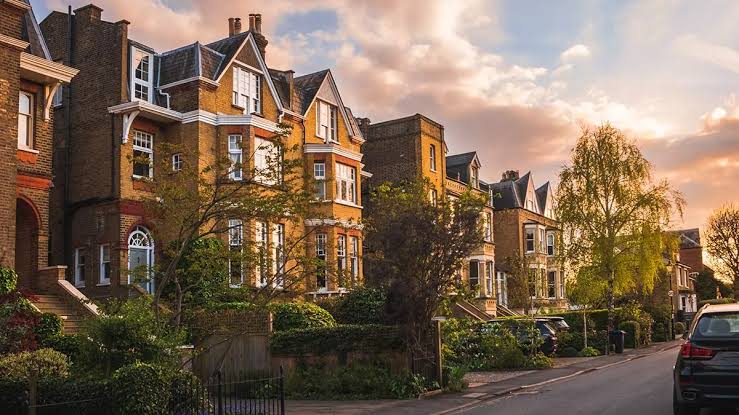
Some of Nigeria’s top bankers and business elites are increasingly acquiring luxury properties in London as a strategy to protect wealth against economic uncertainty, currency volatility and long-term financial risks.
What was once considered a status symbol is now evolving into a broader wealth preservation strategy, with investors seeking international diversification and hard-currency assets despite increasing taxes in the United Kingdom’s luxury housing market.
Recent high-profile acquisitions have renewed attention on the growing appetite among wealthy Nigerians for UK real estate investments.
High-Profile Acquisitions Draw Attention
Over the past year, several notable property acquisitions involving Nigerian business leaders have intensified discussions around elite investment patterns abroad.
Among them is late Access Bank executive Herbert Wigwe, who was reportedly linked to more than 100 London properties through offshore entities.
Access Bank Chief Executive Officer Roosevelt Ogbonna was also reportedly linked to a £15 million acquisition in Hampstead’s Billionaires’ Row, while First HoldCo Chairman Femi Otedola reportedly purchased a £53 million mansion in St John’s Wood.
The growing interest comes at a time when some wealthy individuals in Britain are reassessing their investments amid increasing taxes, tighter regulations and rising living costs.
London Property Seen as Safe-Haven Asset
Industry experts say London remains attractive because of its stability, established legal framework and large Nigerian diaspora population.
According to property professionals, ownership of UK assets offers investors access to stable hard-currency investments capable of preserving value and generating rental income.
As Nigerian businesses increasingly expand internationally, investment in foreign property is also becoming a strategic move for executives with global operations.
The trend reflects a broader shift in wealth management strategies as investors seek protection from local economic volatility.
Weak Naira Fuels Foreign Asset Demand
The sharp depreciation of the naira in recent years has further strengthened interest in overseas investments.
Property analysts note that the decline in the currency’s value significantly reduced local purchasing power and pushed investors toward foreign currency-denominated assets.
For many wealthy Nigerians, UK real estate now serves as both an investment opportunity and a financial hedge against domestic economic risks.
Luxury Market Remains Attractive Despite Taxes
The growing Nigerian appetite for London properties comes despite higher taxes and a slowdown in parts of the UK luxury housing market.
Recent tax policy changes in the UK have increased costs for property buyers, while plans for additional levies on expensive homes are expected in the coming years.
Despite these developments, experts believe prime London locations continue to attract international investors because of their prestige, strong demand and long-term investment value.
Analysts also suggest that ownership of assets in elite neighbourhoods carries social and symbolic value for many global investors.