Delegates from 176 countries attending the 13th World Urban Forum (WUF13) in Baku, Azerbaijan, have called for urgent and coordinated global action to address the worsening housing crisis affecting billions of people worldwide.
The call was contained in the “Baku Call to Action,” a comprehensive document issued at the end of the forum, outlining shared priorities and practical steps for governments, development partners and private sector actors to strengthen housing systems globally.
57,000 Participants Shape Global Housing Roadmap
The forum brought together more than 57,000 participants, including over 3,000 online attendees, alongside governments, local authorities, civil society groups, researchers, businesses and grassroots organisations.
The wide participation made WUF13 one of the most inclusive global gatherings on urban development, reflecting diverse perspectives on housing, infrastructure and sustainable cities.
Housing Crisis Linked to Infrastructure and Climate Risks
The Baku Call to Action noted that approximately 2.8 billion people globally live in inadequate housing, underscoring the scale of the challenge.
It stressed that housing must not be viewed only as shelter provision, but as part of a wider system connected to land, infrastructure, transport, public services and economic opportunity.
The document also highlighted how housing inequality is worsened by rising costs, land speculation, displacement, weak governance and climate-related risks such as floods and extreme heat.
Call for Climate-Resilient Housing Systems
A key emphasis of the declaration is the need to integrate climate resilience into housing development.
It called for investment in nature-based solutions, retrofitting of existing housing stock, community-led housing initiatives and improved disaster preparedness systems.
According to the document, vulnerable communities often face the dual burden of housing insecurity and exposure to climate shocks.
Stronger Governance and Financing Urged
The Baku Call to Action also called for improved multilevel governance, expanded housing finance systems and better access to reliable housing data.
It emphasised the importance of empowering local governments and communities to play a stronger role in delivering housing solutions.
UN Highlights Africa’s Housing Deficit
Speaking at a special session on the Africa Affordable Housing Compact, United Nations Deputy Secretary-General Amina Mohammed described housing as central to achieving the Sustainable Development Goals.
She stressed that secure and adequate housing creates the foundation for progress across health, education, gender equality and climate action.
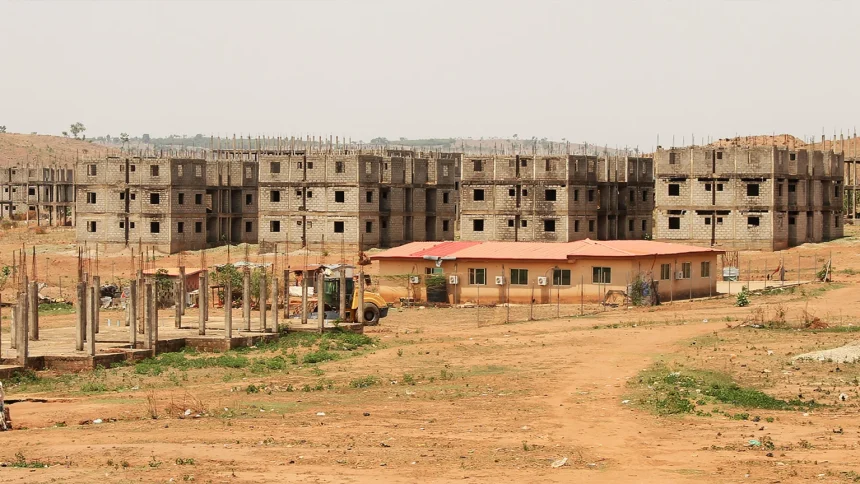
UN-Habitat Executive Director Anacláudia Rossbach further warned that Africa’s housing deficit already exceeds 60 million units and could surpass 130 million by 2030 if current trends continue.
She also noted a financing gap of over $1.4 trillion, while highlighting Africa’s rapidly growing urban population as both a challenge and an investment opportunity.
Africa’s Housing Finance Gap and New Compact
Rossbach said Africa receives less than 3 percent of global housing finance despite accounting for nearly one-fifth of the world’s urban population.
To address this imbalance, the African Affordable Housing Compact was introduced, focusing on policy reform, financing pipelines and data systems.
The initiative is built around four key pillars: housing fellowships, deal platforms, data hubs and country-level housing compacts.
A Global Push for Implementation
The WUF13 declaration and associated discussions reinforce a global shift from policy discussions to implementation-focused housing solutions.
Stakeholders agreed that addressing the housing crisis requires coordinated action across governments, investors, and development institutions, with strong emphasis on sustainability, climate resilience and inclusive urban growth.