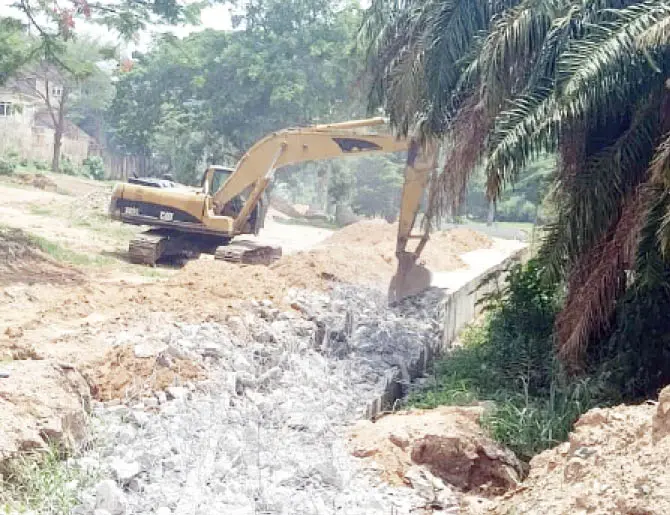
The Federal Capital Territory Administration (FCTA) has launched investigations into some of its officials over allegations of complicity in the encroachment and conversion of green areas across Abuja, in violation of the city’s master plan.
Authorities and urban development stakeholders say the steady disappearance of designated green spaces — meant for recreation, environmental protection and urban balance — has reached alarming levels, with officials suspected of colluding with developers and private individuals.
Green areas, which include parks, gardens, waterways, flood plains and corridors for public utilities such as sewage systems and high-tension electricity lines, are critical to Abuja’s ecological and urban sustainability. However, many of these spaces are now being overtaken by residential and commercial developments.
According to Abuja Metro, the distortions have also affected waterways and drainage channels, increasing the risk of flooding and environmental degradation across several districts of the capital.
Officials Under Scrutiny
The Coordinator of the Abuja Metropolitan Management Council (AMMC), Chief Felix Obuah, confirmed during a recent inspection of Guzape District that some officials of the FCTA would be investigated for their roles in the illegal conversions.
Although he declined to name the officers involved, Obuah said anyone found culpable would face sanctions in line with civil service regulations.
“Developers could not have carried out these large-scale violations without the knowledge or support of some officials,” he said, adding that the administration would “fish out everyone involved, regardless of status.”
A previous investigation by Weekend Trust had also revealed how developers were steadily taking over reserved green areas with the alleged backing of land administration officials.
Districts Most Affected
Findings indicate that green spaces in Guzape, Wuse, Utako, Jabi, Wumba, Maitama and the Central Business District have been significantly compromised.
In Guzape alone, credible sources said about 70 hectares of land originally reserved for green areas and high-tension corridors have been reallocated for residential development, with construction already underway in some locations.
One notable case is a 3.4-hectare U-shaped green zone along Abdulrahman Okene Street, originally earmarked for a park, which has reportedly been converted to residential plots.
The AMMC recently arrested a developer in Guzape accused of illegally converting waterways and green areas and selling them to unsuspecting buyers. An investigative committee found that the developer grossly exceeded the scope of the approval granted.
Similar violations were uncovered in Utako, Katampe and Wumba districts. In Maitama, a floodplain opposite the Central Bank of Nigeria Training Centre along Shehu Shagari Way has reportedly been fenced and reallocated for development.
Encroachments were also observed in Garki’s Central Business District, where a site originally designated as a park was redesignated for the construction of a magistrate court along Funmilayo Ransome-Kuti Road.
Other affected locations include areas behind Government Secondary School, Area 3, near the NNPC Mega Station, and around the National Mosque, close to Nigeria Exim Bank, City Park and Wood Bridge Park.
At Kado Estate, clearing activities were noticed along a waterway opposite Lakeview Homes, despite a “stop work” notice issued by the Development Control Department.
Pressure on Land Allocation
Explaining why such violations persist, the immediate past chairperson of the Nigerian Institute of Town Planners (FCT Chapter), Tpl Lami Ayuba, said demand for housing in highbrow districts is placing enormous pressure on government officials.
She noted that although Abuja has 92 districts, only about 20 have been substantially developed.
“Because infrastructure has not been extended to many districts, areas like Maitama, Guzape and Garki are becoming overcrowded, leading to questionable reallocations,” she said.
Enforcement and Demolitions Begin
The FCTA, through the AMMC, has declared what it described as a “total war” on developers and individuals encroaching on green areas, flood plains and high-tension corridors.
During inspections in Guzape, Utako, Katampe and Wumba, Obuah warned that all illegal structures would be demolished without exception.
“These encroachments obstruct waterways and destroy green spaces essential to the city’s ecosystem. If allowed to continue, the consequences for public safety and the environment will be severe,” he said.
In Wumba District, the AMMC ordered the demolition of several duplexes built on land reserved for park development. In Katampe, developers were given 48 hours to present valid documents or face demolition.
Less than 48 hours later, the Director of Development Control, Tpl Mukhtar Galadima, led demolition teams to affected areas, confirming that at least ten duplexes in Wumba District had been marked for removal.
Reclaiming Abuja’s Green Spaces
The FCTA insists the enforcement drive will continue until all illegally converted green areas are reclaimed, warning that no individual or developer will be spared.
Officials say the move is part of broader efforts to restore Abuja’s master plan, protect the environment and prevent future disasters linked to blocked waterways and uncontrolled urban growth.