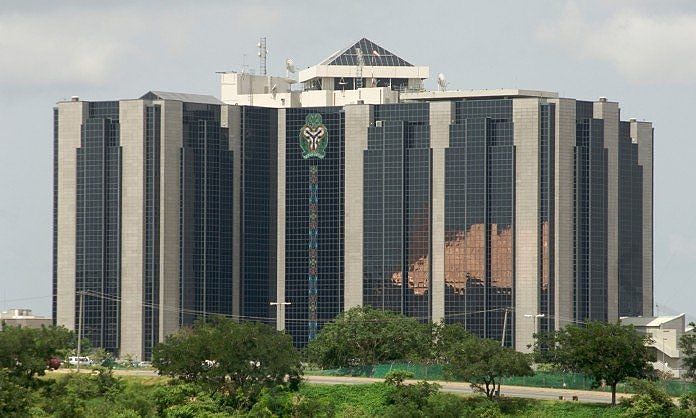
Nigeria’s economy is expected to grow by 4.49 per cent in 2026, driven by sustained reform momentum, stronger private sector investment and improving macroeconomic conditions, according to the Central Bank of Nigeria (CBN).
The projection, contained in the apex bank’s 2026 Macroeconomic Outlook for Nigeria, represents an improvement over the estimated 3.89 per cent growth anticipated for 2025.
The CBN said the outlook reflects optimism around policy consistency, enhanced investor confidence and a gradual stabilisation of key economic indicators.
The bank stressed, however, that the growth forecast is contingent on the effective implementation of well-coordinated fiscal and monetary policies.
It noted that fiscal operations anchored on the full execution of the 2025–2027 Medium-Term Expenditure Framework (MTEF) are expected to stimulate domestic consumption, support investment and boost aggregate demand and employment over the medium term.
According to the CBN, ongoing structural reforms by the government have begun to yield measurable gains, including improvements in the business environment, increased capital inflows, higher government revenue and greater stability in the foreign exchange market. These developments, it said, are expected to underpin economic expansion in 2026.
The apex bank also highlighted the role of monetary policy easing in supporting growth. Expected reductions in lending rates, it said, would lower borrowing costs and improve access to credit for businesses and households, thereby encouraging productive activity across key sectors of the economy.
Private sector investment is projected to play a major role in the growth outlook, with large-scale projects such as the Dangote Refinery expected to significantly boost output, enhance energy security and reduce reliance on imported petroleum products. Increased domestic refining capacity is also expected to moderate energy costs and support industrial activity.
In the oil sector, the CBN projected higher crude oil production, supported by improved security around oil assets and enhanced monitoring mechanisms. The bank cited the establishment of the Production Monitoring Command Centre (PMCC) as a key intervention aimed at curbing production losses and improving transparency in the sector. Stable global energy prices and expanded midstream activities are also expected to support output growth.
The outlook further reflects expectations of increased government spending, including pre-election expenditure, which could provide additional stimulus to aggregate demand. The CBN said effective coordination between fiscal and monetary authorities, particularly in sustaining exchange rate stability, controlling inflation and promoting job creation, would be critical to realising the projected growth.
On inflation, the bank projected a continued downward trend in 2026, with headline inflation expected to decelerate to 12.94 per cent from an estimated 21.26 per cent in 2025.
The anticipated moderation is attributed to stability in the foreign exchange and energy markets, the lagged effects of earlier interest rate hikes and improved policy coordination. Declining food prices and lower petrol costs, supported by increased competition in the midstream oil sector, are also expected to contribute to easing inflationary pressures.
Despite the optimistic outlook, the CBN warned of several downside risks that could undermine growth. These include persistently high costs of doing business, infrastructure deficits and insecurity, which could constrain productivity and private sector activity.
The bank also noted that aggressive cost-cutting measures by firms could lead to job losses, shrink the formal sector and weaken overall economic performance.
Other risks identified include adverse climatic conditions that could disrupt agricultural output, transportation and business operations, as well as negative shocks to crude oil production arising from security breaches or force majeure events around oil installations.
The baseline projections assume an average crude oil price of $55 per barrel in 2026, in line with expectations of moderating global oil prices amid rising inventories and supply pressures. The outlook also assumes an average exchange rate of N1,400 to the dollar in 2026, supported by improved efficiency in the Nigerian Foreign Exchange Market, higher capital inflows and a current account surplus.
Domestic crude oil production is projected at about 1.50 million barrels per day, excluding condensates, while petrol pump prices are expected to hover around N950 per litre. Government expenditure is expected to align with the 2025–2027 MTEF, reflecting an expansionary fiscal stance aimed at supporting the administration’s $1 trillion economy initiative.
Sectoral performance is also expected to support growth in 2026. The services sector is projected to remain a key driver, led by transport, wholesale and retail trade.
The information and communication technology subsector is expected to benefit from expanded 5G coverage, improved internet connectivity and accelerated digital transformation. Similarly, the real estate sector is projected to record increased activity, supported by sustained government intervention, expanding mortgage financing and rising demand for housing.
Overall, the CBN said the 2026 outlook is anchored on improving business confidence, stronger investor sentiment and continued reform implementation, while cautioning that sustained policy discipline will be essential to translating projections into inclusive and durable economic growth.