


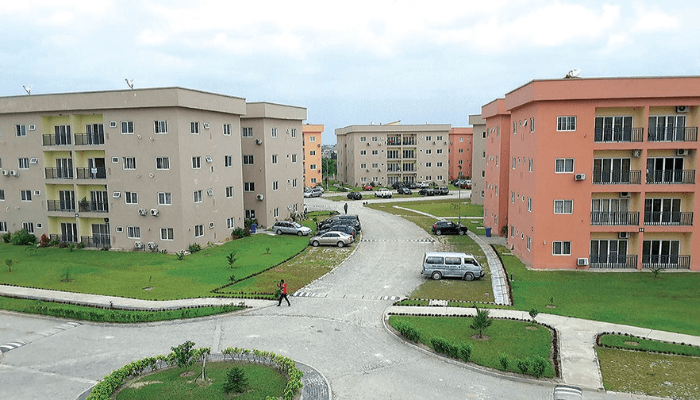
Nigeria’s real estate market is entering 2026 with renewed investor optimism as growth corridors in major cities are projected to deliver strong rental yields and steady capital appreciation, particularly in mid- to upper-market residential segments.
Strong rental yields and asset appreciation are expected to define Nigeria’s property investment landscape in 2026, as demand continues to outpace supply across key urban centres, analysts say.
Growth corridors in Lagos, Abuja, and Port Harcourt are forecast to generate annual rental yields of between 8 and 18 percent, supported by rapid urbanisation, population inflows, and infrastructure-led expansion.
In Lagos, areas such as Lekki Phase 1, Ajah, and Sangotedo are emerging as prime rental yield zones, driven by improved road networks, proximity to commercial hubs, and strong demand from professionals and expatriates.
Meanwhile, emerging districts including Ibeju-Lekki, Epe, and Ikorodu are attracting long-term investors focused on capital appreciation. Returns in these locations are projected at 10 to 35 percent, buoyed by large-scale infrastructure projects, industrial activity, and land banking opportunities.
High-end neighbourhoods such as Ikoyi, Victoria Island, and Banana Island are expected to maintain their status as safe-haven assets, delivering stable capital appreciation of 5 to 10 percent annually. Although yields in these luxury markets are moderate, demand remains strong among high-net-worth individuals and diaspora investors seeking wealth preservation amid macroeconomic volatility.
Analysts attribute the positive outlook to the momentum recorded in 2025, when the sector benefited from sustained housing demand, largely driven by internal migration, expatriate inflows, and Nigeria’s widening housing deficit—estimated at about three million units in Lagos alone.
“In 2026, investors will continue to favour infrastructure-backed corridors and quality assets that offer transparency, professional management, and sustainability features,” a Lagos-based real estate analyst said.
With inflationary pressures and rising construction costs persisting, investors are increasingly balancing capital appreciation with reliable rental income. As home ownership remains out of reach for many households, demand for rental accommodation is expected to surge, particularly in mid-market locations popular with tech professionals and expatriates.
Infrastructure remains a key value driver. Properties located near strategic projects such as the Lekki Deep Sea Port, free trade zones, new expressways, and rail corridors are projected to appreciate faster than the broader market, with potential gains of 18 to 35 percent above average.
Beyond residential assets, investor interest is also expanding into commercial and industrial real estate. Logistics hubs, warehousing facilities, small-format retail centres, and flexible office spaces are gaining traction, reflecting the growth of e-commerce and evolving work patterns.
Developers, on their part, are shifting construction activity toward emerging suburbs where land availability is higher and entry costs are lower. Areas such as Epe, Ibeju-Lekki, Ikorodu, and Sangotedo are increasingly viewed as the next frontiers for large-scale residential development.
Technology adoption is also reshaping the sector. Developers are embracing PropTech solutions, including digital land titling, GIS mapping, and online property management platforms, to improve efficiency and rebuild investor confidence amid lingering concerns over land fraud.
At the consumer end of the market, demand is tilting decisively toward quality and amenities. Developers are responding by moving away from bare land sales and focusing on purpose-built communities and mixed-use developments that integrate security systems, renewable energy, water recycling, and lifestyle facilities such as gyms, parks, and recreational spaces.
As investors become more discerning, professionally structured real estate firms with documented titles, transparent processes, and strong governance are expected to attract the bulk of institutional and foreign capital in 2026.