


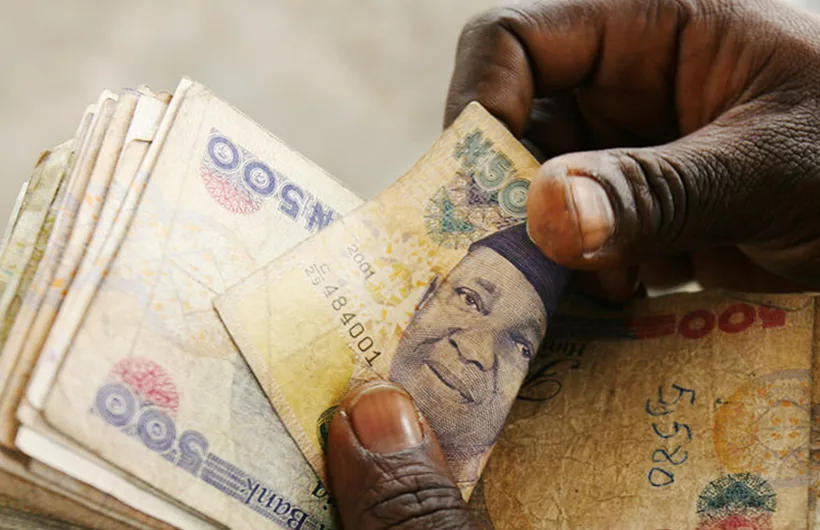
Nigeria’s money supply climbed to N124.41 trillion at the end of 2025, reflecting a sharp increase in liquidity across the financial system despite continued monetary tightening by the Central Bank of Nigeria (CBN).
Latest data from the CBN’s Money and Credit Statistics show that broad money supply (M3) rose by N11.05 trillion year-on-year, from N113.36 trillion in December 2024 to N124.41 trillion in December 2025. The growth was driven largely by strong expansion in bank deposits, currency outside the banking system, and increased government borrowing.
Analysts say the figures highlight a disconnect between tight monetary policy and actual liquidity conditions in the economy, as elevated interest rates have not fully curbed money growth.
Deposit Growth Drives Liquidity Expansion
A major contributor to the rise in money supply was quasi money, which includes savings and time deposits. Quasi money increased to N82.26 trillion in December 2025, up from N74.52 trillion recorded a year earlier. This represents a N7.74 trillion increase, signalling stronger deposit mobilisation by deposit money banks.
The growth suggests that higher interest rates may have encouraged Nigerians to hold more funds in savings and fixed deposit accounts, even as borrowing costs remain elevated.
Narrow money also expanded over the period, rising to N42.14 trillion in December 2025 from N38.81 trillion in December 2024. This reflects a year-on-year increase of N3.33 trillion.
Within this category, currency outside banks rose to N5.41 trillion, compared to N5.13 trillion a year earlier. The N282.6 billion increase points to sustained cash usage across households and the informal sector, where cash transactions remain dominant.
Demand deposits, which capture funds held in current accounts, recorded even stronger growth. They rose to N36.73 trillion in December 2025 from N33.69 trillion in December 2024, an increase of about N3.04 trillion. This trend reflects higher transaction volumes, increased government spending, and improved nominal economic activity.
Credit Expansion Skewed Toward Government
The data also show that net domestic credit expanded alongside money supply growth. Net domestic credit rose to N110.06 trillion in December 2025 from N105.16 trillion a year earlier.
However, credit to the private sector declined slightly, falling to N75.83 trillion from N78.02 trillion. This suggests that businesses and households faced tighter credit conditions, likely due to high interest rates and stricter lending standards.
In contrast, credit to the government increased sharply, rising to N34.22 trillion in December 2025 from N27.14 trillion in December 2024. The increase underscores the role of public sector borrowing in driving liquidity growth during the period.
Economists note that sustained government borrowing can inject liquidity into the system even when monetary authorities are attempting to tighten financial conditions.
Base Money, Cash in Circulation Rise
Base money, which measures the most liquid components of the monetary system, also recorded significant growth. It stood at N37.77 trillion in December 2025, up from N32.67 trillion in December 2024, representing a N5.10 trillion increase.
Currency in circulation rose to N5.73 trillion from N5.44 trillion, while bank reserves increased to N32.04 trillion from N27.23 trillion over the same period. The rise in reserves reflects liquidity management operations by the CBN and increased deposits within the banking system.
Money Market Conditions Remain Tight
Despite the rise in overall money supply, liquidity conditions in the money market remained tight in recent weeks. System liquidity closed last week at a N2.4 trillion deficit, deeper than the N1.6 trillion shortfall recorded in the previous week.
The tightness was attributed to limited inflows and high standing deposit facility placements of about N2.5 trillion, which continued to sterilise available funds. Intermittent liquidity injections from primary market repayments were insufficient to ease pressures.
At its most recent Treasury bills auction, the CBN offered N150 billion of 91-day bills, N200 billion of 182-day bills, and N800 billion of 364-day instruments. Investor demand was strongest for the 364-day bills, with subscriptions reaching about N4.4 trillion.
Stop rates settled at 15.8 per cent for 91-day bills, 16.7 per cent for 182-day bills, and 17.0 per cent for 364-day bills.
Interbank rates, however, moderated. The overnight policy rate (OPR) and overnight rate (OVN) declined to 22.5 per cent and 22.8 per cent, respectively, from over 26 per cent previously, suggesting easing funding stress across the banking system.