


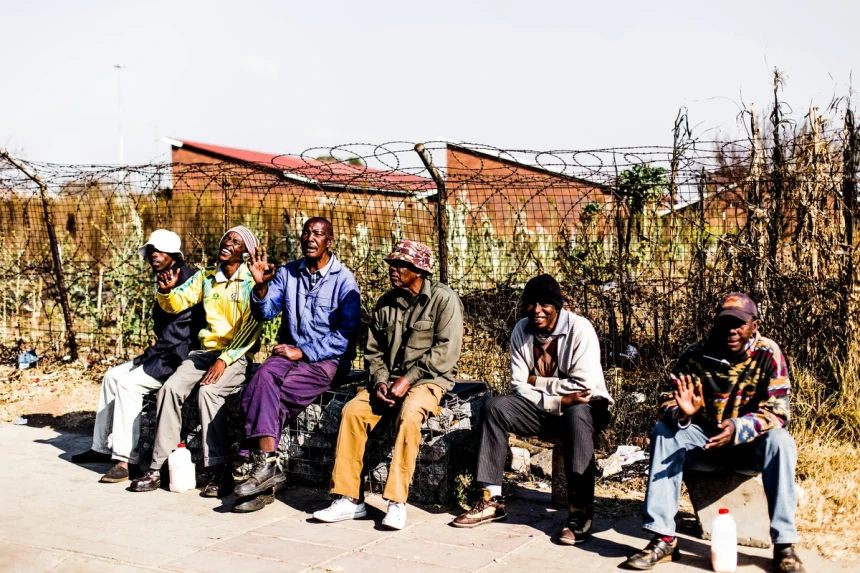
South Africa’s unemployment crisis has deepened, with the number of unemployed people rising to 8.5 million in the second quarter of 2026 as the country’s labour market continues to face significant pressure.
The latest figures from Statistics South Africa (Stats SA) showed that the official unemployment rate increased to 33.6 per cent, up from 32.7 per cent in the first quarter. The latest rate is the country’s highest since 2022.
The data covers labour-market conditions between April and June 2026 and shows that unemployment increased by 345,000 people during the quarter.
At the same time, employment declined slightly, with the number of employed people falling by 16,000 to 16.7 million.
Labour Market Under Pressure
The deterioration came despite a 121,000 increase in South Africa’s working-age population during the quarter.
The labour force expanded by 329,000 people, while the labour absorption rate declined to 39.6 per cent, indicating that employment opportunities are not keeping pace with the number of people entering or remaining in the labour market.
Employment losses were concentrated in sectors including community and social services and mining, while trade and construction recorded employment gains.
The latest figures represent another setback for South Africa’s economic recovery. The country’s unemployment rate had already increased from 31.4 per cent in the final quarter of 2025 to 32.7 per cent in the first quarter of 2026.
Foreign-Owned Businesses Face Pressure
The worsening labour market comes amid continued tensions surrounding foreign nationals and foreign-owned businesses operating in South Africa.
Nairametrics reported that anti-foreigner sentiment and xenophobic attacks have contributed to some foreign nationals leaving the country, while some Nigerian-owned businesses have reportedly shut down or relocated.
The situation has raised concerns about the possible impact on investment, entrepreneurship and employment, particularly where foreign-owned small businesses employ South African workers.
The debate has also generated calls from some Nigerians for economic measures against South African businesses in response to attacks and hostility towards Nigerians and other foreign nationals.
Economic Pressures Persist
South Africa’s weak employment performance is occurring against a difficult economic backdrop.
The latest quarter captured the period following the escalation of the Middle East conflict in February, which contributed to higher global energy prices and increased pressure on household budgets.
The South African Reserve Bank also raised interest rates in May to contain inflation, adding pressure to investment and consumer spending. The central bank’s benchmark rate subsequently remained at 7 per cent.
The combination of weak job creation, high unemployment, inflation concerns and elevated borrowing costs presents a difficult environment for policymakers.
What It Means for South Africa
The latest unemployment figures highlight the scale of the challenge facing South Africa’s economy.
With 8.5 million people officially unemployed, policymakers face increasing pressure to create conditions that encourage investment, expand businesses and generate sustainable employment.
The situation also demonstrates why maintaining a stable environment for both domestic and foreign entrepreneurs matters. Businesses can contribute to employment and economic activity, but continued tensions around foreign-owned enterprises could make the investment environment more difficult.
For South Africa, the immediate challenge is therefore not simply reducing the unemployment rate. It is creating enough productive economic activity to absorb a rapidly growing labour force while maintaining conditions that encourage businesses to invest and hire.
