For many Nigerian property buyers, the biggest warning signs of a failed estate may only become obvious after they have already committed their money.
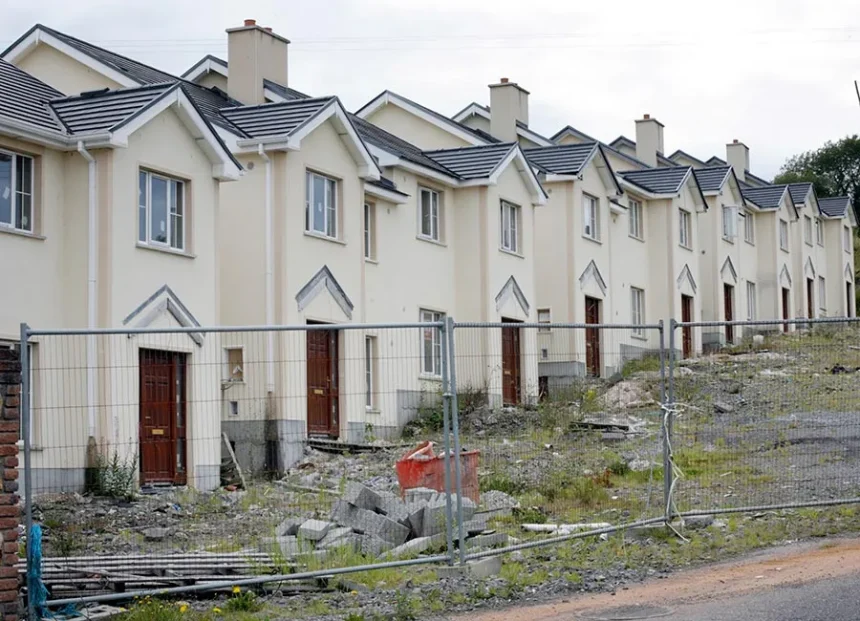
A project may launch with attractive brochures, ambitious infrastructure plans and promises of phased development. Buyers purchase plots and make deposits expecting to become part of a growing residential community. But in some cases, construction eventually slows, infrastructure remains incomplete and the promised estate fails to materialise.
The situation is raising concerns about the gap between marketing an estate and actually developing it.
According to Abuja-based realtor and real estate educator Chijioke Adimike, buyers can be attracted by convincing sales materials and development plans without fully understanding what it will take to deliver the proposed community.
He noted that an estate launch is essentially a sales milestone, while actual development requires adequate financing, regulatory approvals, infrastructure, construction sequencing and sustained execution.
When financing becomes the problem
One of the biggest risks facing estate projects is how development is financed.
Professional land surveyor and GIS expert Abolade Durowoju said some estates rely heavily on payments from subscribers to finance infrastructure, without maintaining sufficient capital reserves.
When new sales slow, the developer may have less money available for construction. Slower construction can then reduce buyer confidence, creating a cycle in which fewer people want to invest in the project.
This creates a difficult situation for existing buyers. Their money may already be committed to the project, while the development itself remains incomplete.
A master plan is not development
A major lesson for property buyers is the difference between an estate’s proposed master plan and what is actually being delivered.
An attractive master plan can show roads, houses, recreational areas and other facilities. But the existence of a plan does not guarantee that the developer has the financing, approvals or operational capacity to execute it.
Durowoju described development as requiring capital, coordination, infrastructure sequencing and sustained execution discipline.
This explains why two estates launched around the same period can have very different outcomes several years later.
Location can become a liability
Location is another factor that can determine whether an estate succeeds.
An estate may be positioned in an area expected to experience future growth. But if roads, drainage, electricity and other infrastructure do not arrive as expected, investors can end up waiting years for surrounding development to catch up.
Where an estate is poorly connected to major access routes, the lack of infrastructure can also reduce its attractiveness to potential buyers and residents.
As a result, owning a plot does not automatically mean the property will appreciate as expected.
Governance and approvals matter
Poor governance, internal disputes, weak coordination and regulatory problems can also slow down estate development.
These issues are particularly difficult for buyers to identify during the sales process because they may not be visible when an estate is being marketed.
A polished brochure can communicate the developer’s vision, but it cannot by itself demonstrate whether the project has the financial and regulatory foundation required for completion.
Buyers can end up with trapped capital
When an estate remains stagnant, investors can find it difficult to resell their plots at the expected value.
Limited infrastructure and weak demand can reduce liquidity, leaving buyers with capital tied up in an asset that may take years to become attractive to other investors.
In some cases, investors may eventually accept only a marginal gain simply to recover their capital and exit the project.
The fundamental lesson is that buying land is not necessarily the same as buying into a functioning development.
The future value of an estate depends on whether the promised infrastructure, connectivity, population growth and economic activity actually materialise.
For prospective buyers, proper due diligence before making payment is therefore critical. Buyers need to look beyond the sales pitch and assess whether the developer’s plans are supported by realistic financing, approvals, infrastructure commitments and an executable development strategy.
For Nigeria’s property market, the growing concern over stalled estates also highlights the need for greater transparency and stronger standards around estate development.
A successful housing project should ultimately be judged not by how impressive its launch is, but by whether it delivers the community that buyers were promised.